 Westminster, London, UK
 165 sqm
 comlpeted / 2025
 Vigo Jansons Photography | VJ Production LTD
Nestled in the heart of Westminster, within the picturesque district of Little Venice, this house sits among canals and heritage façades that preserve the charm of early twentieth-century London. Built around 1900, it belongs to an architectural era when the city was evolving rapidly yet retained the grace of its Victorian and Edwardian roots. Today, the building stands as part of London’s living history — its renovation is a gesture of respect for the past, merging the authenticity of an old structure with the comfort and clarity of contemporary life.
From the very first meeting, the designer and the client discovered a shared sense of humour, aligned values, and a similar understanding of aesthetics. This synergy became the foundation of the collaboration, allowing the inevitable challenges of a complex renovation to be approached with ease, mutual respect, and a shared focus on quality and outcome.
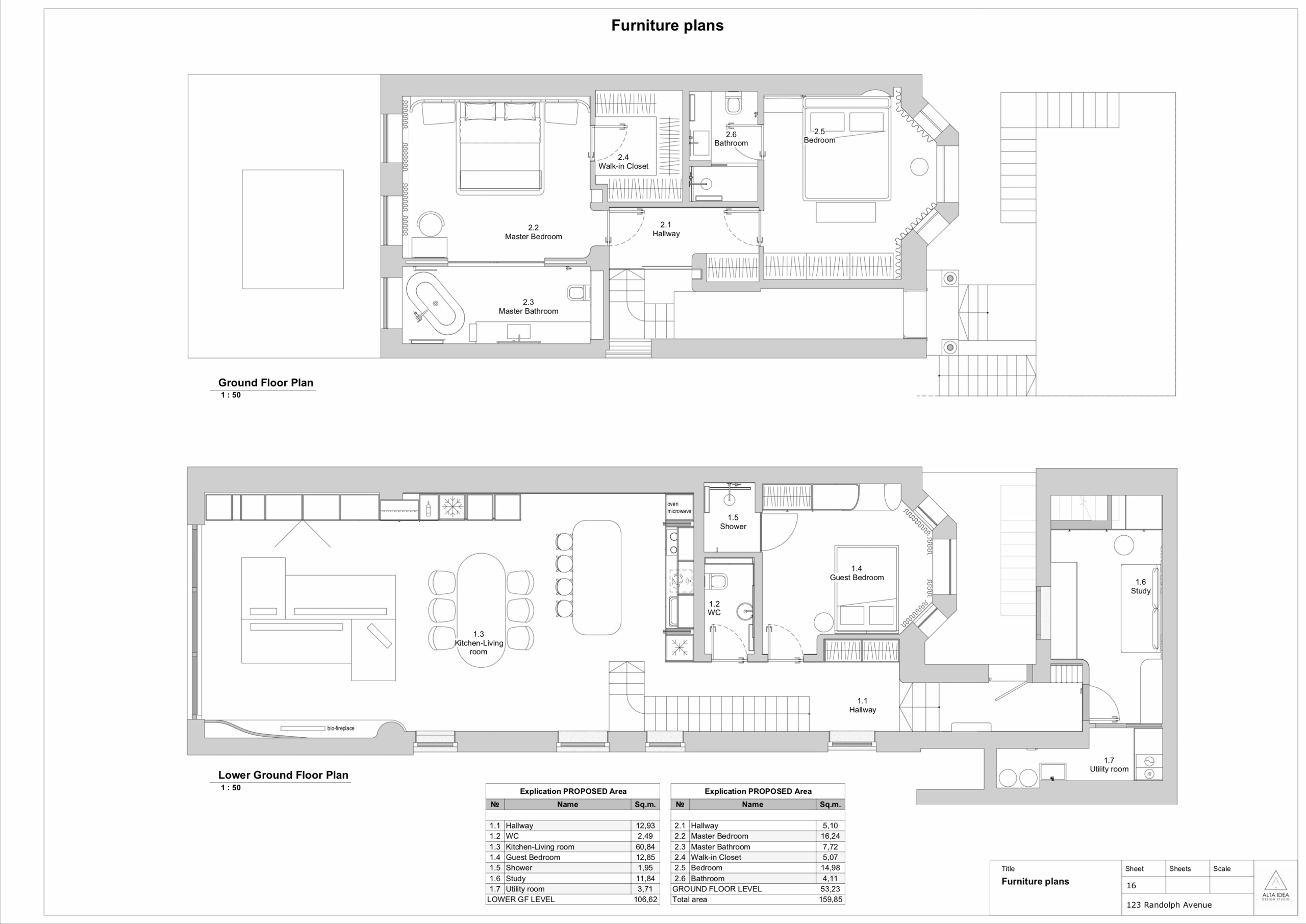
The client’s desire for seclusion and visual calm became the project’s architectural core. The design team carried out a full reconfiguration, transforming what was once a dark, narrow home with heavy staircases and redundant partitions into an open, luminous space. The total area expanded from 120 to 165 square metres, giving the house a renewed sense of volume and light.
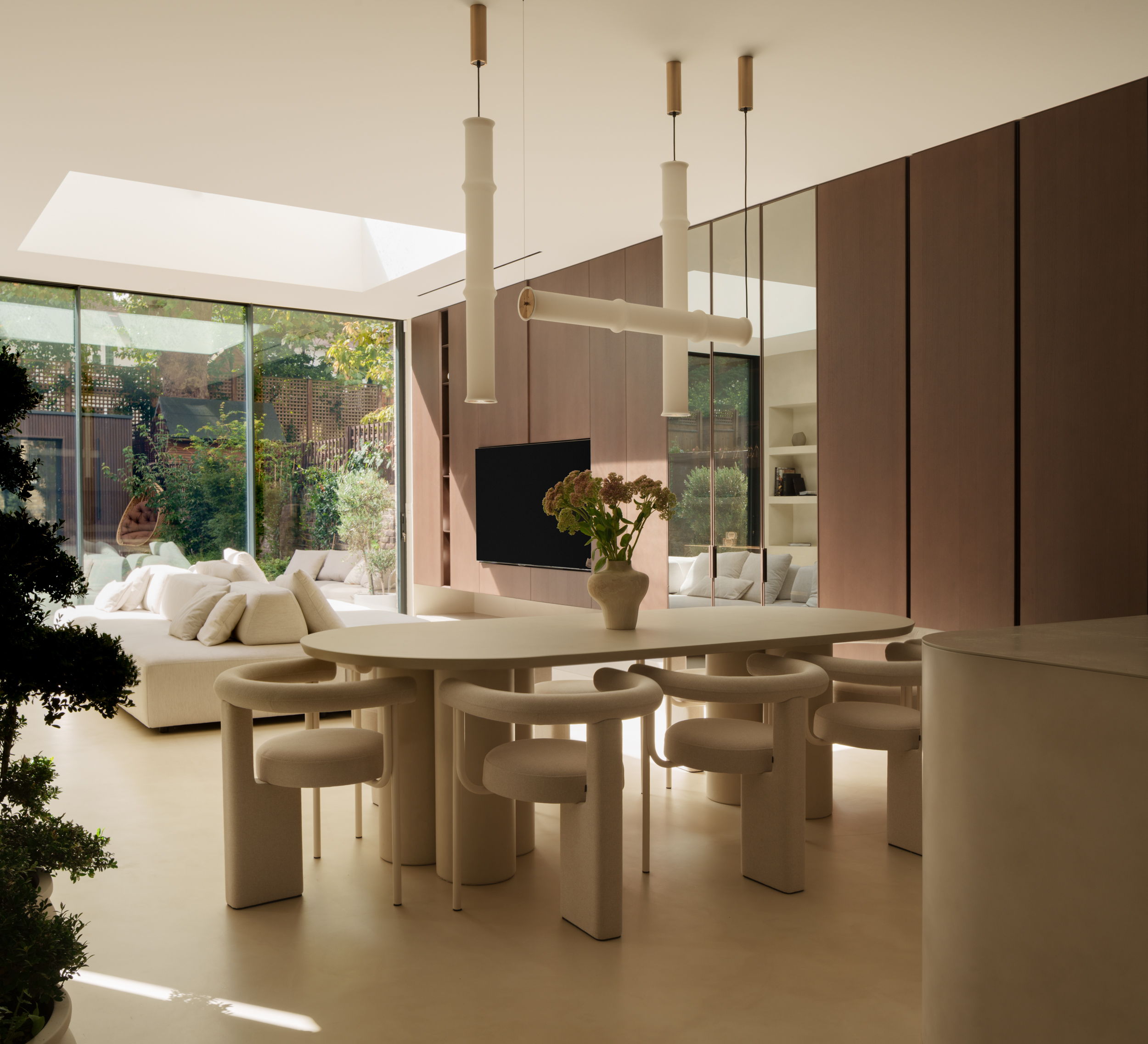
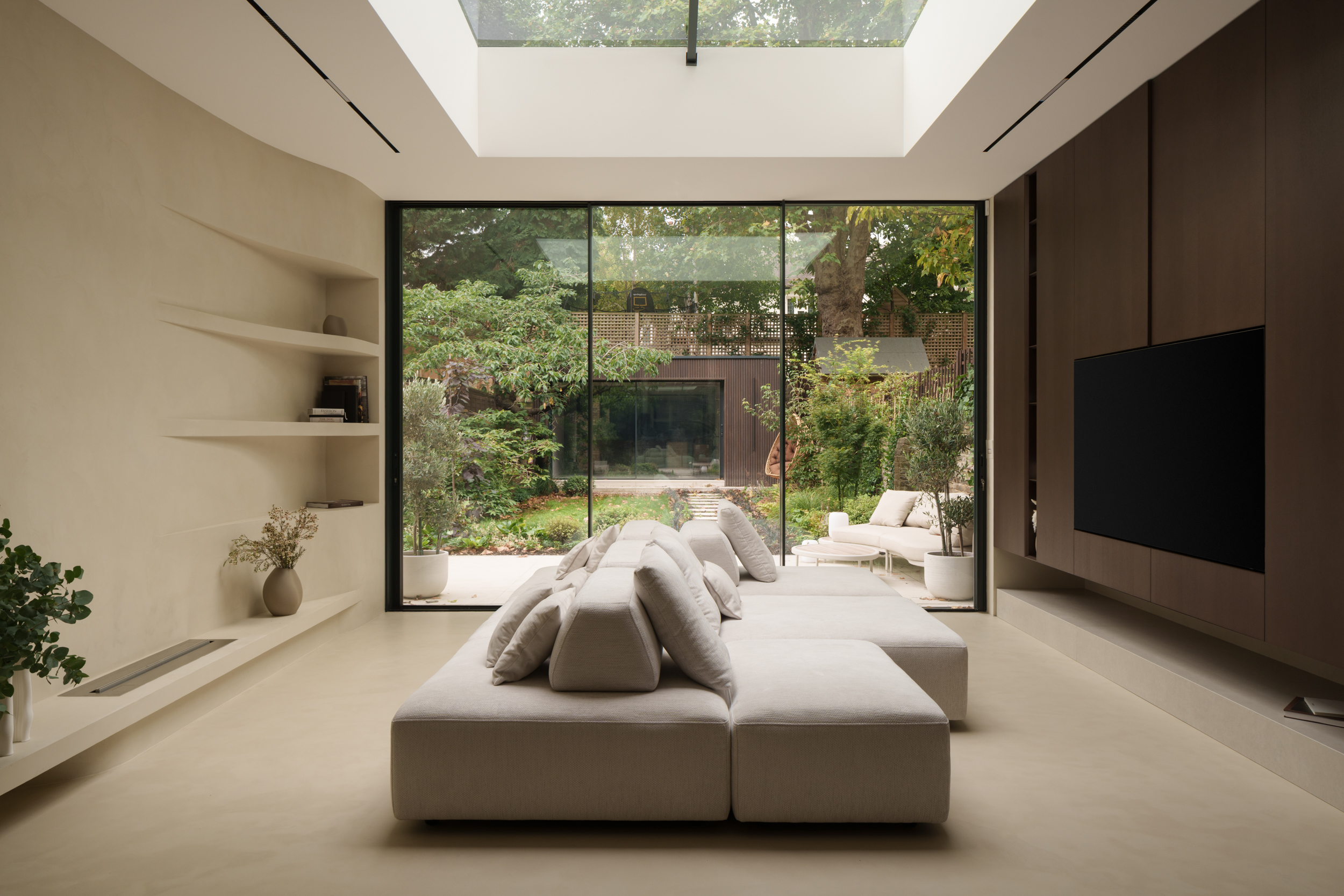
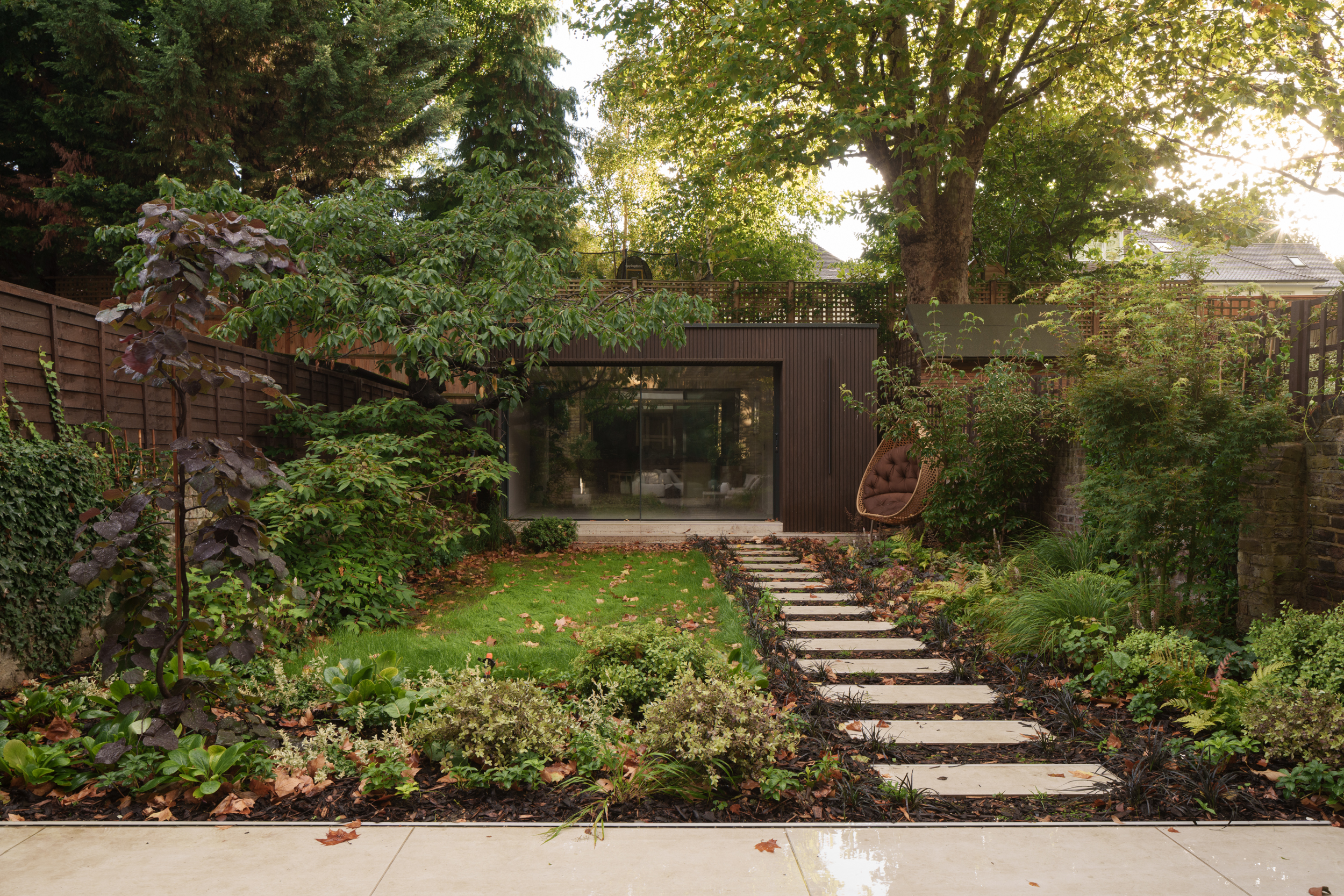
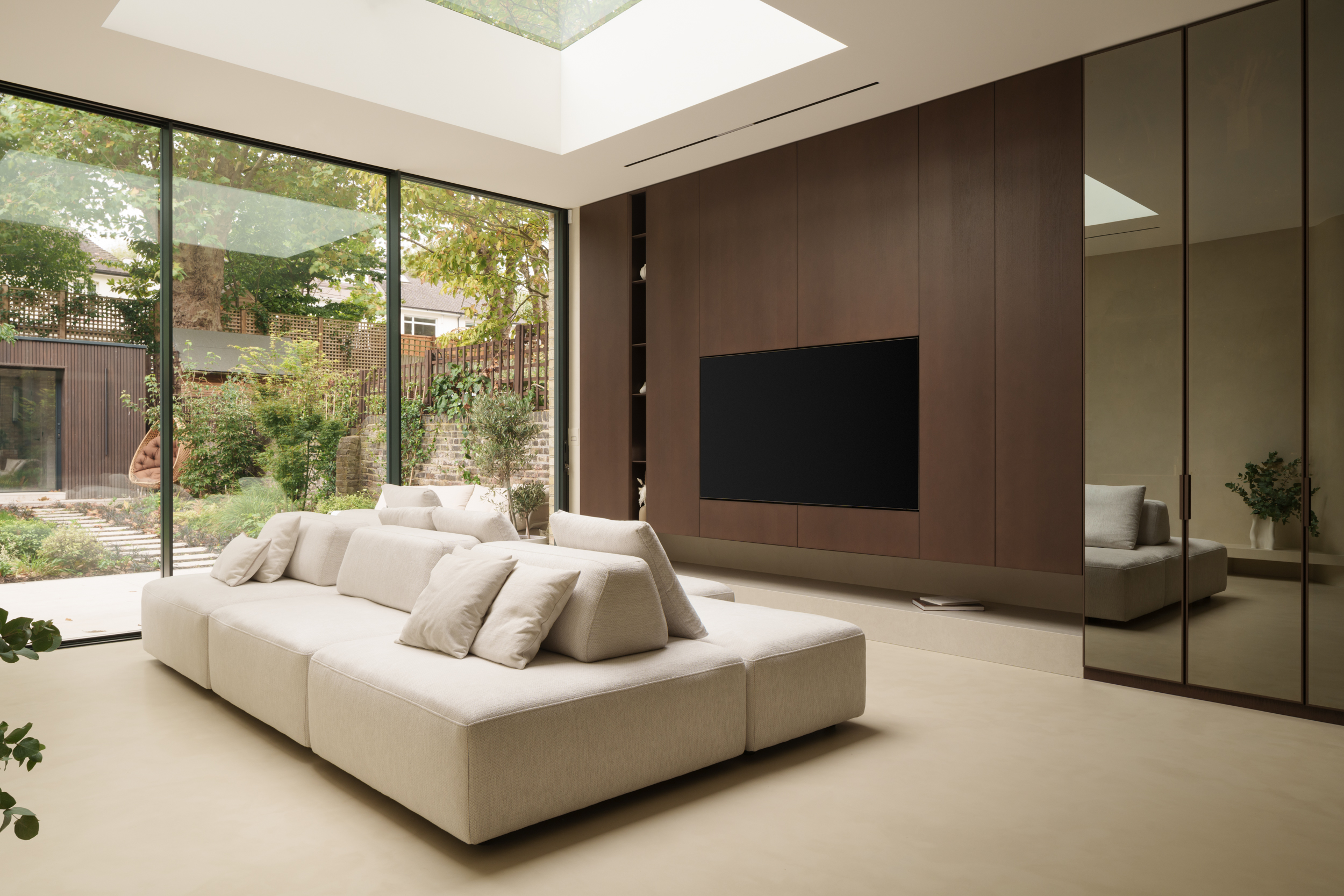
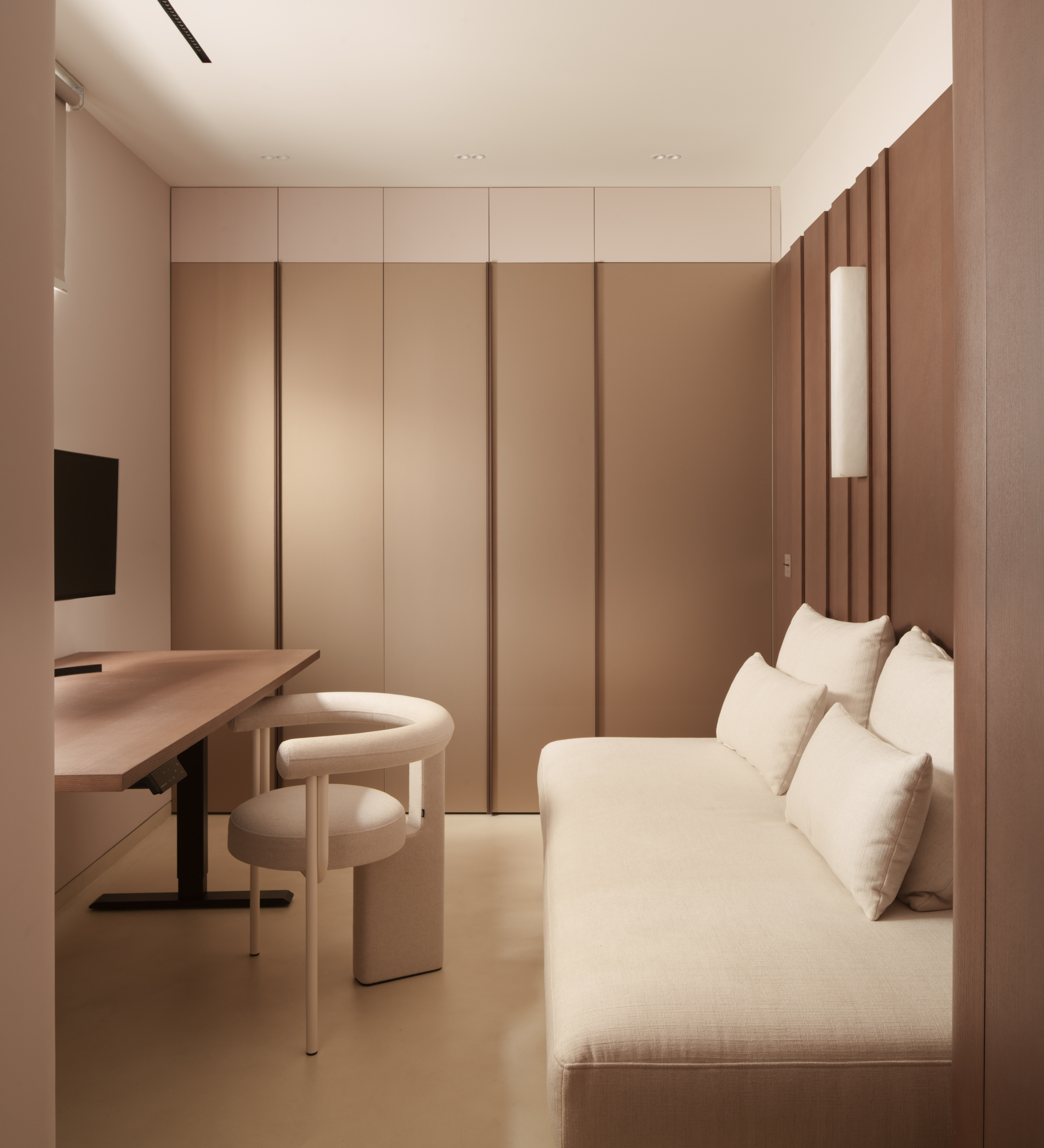
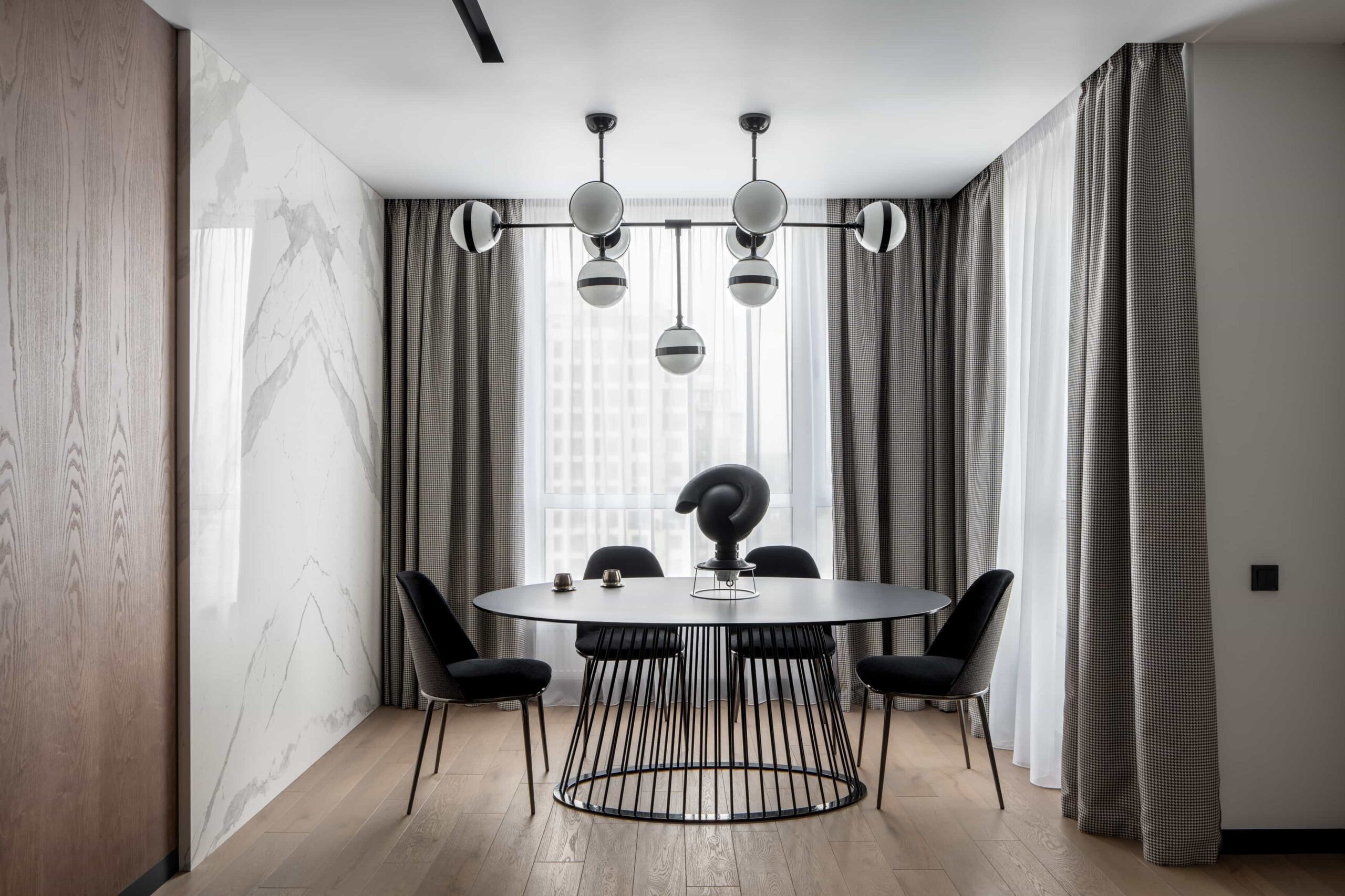
The open-plan living and dining area was extended by five metres to include direct access to a tranquil courtyard garden, while a study was added to the front of the house. Indoors and outdoors now flow seamlessly into one another, with a gentle rhythm that connects interior and landscape. At the far end of the courtyard, a yoga and retreat pavilion continues the home’s philosophy of calm and balance. Views from both the living room and the pavilion reinforce a feeling of unity with nature.
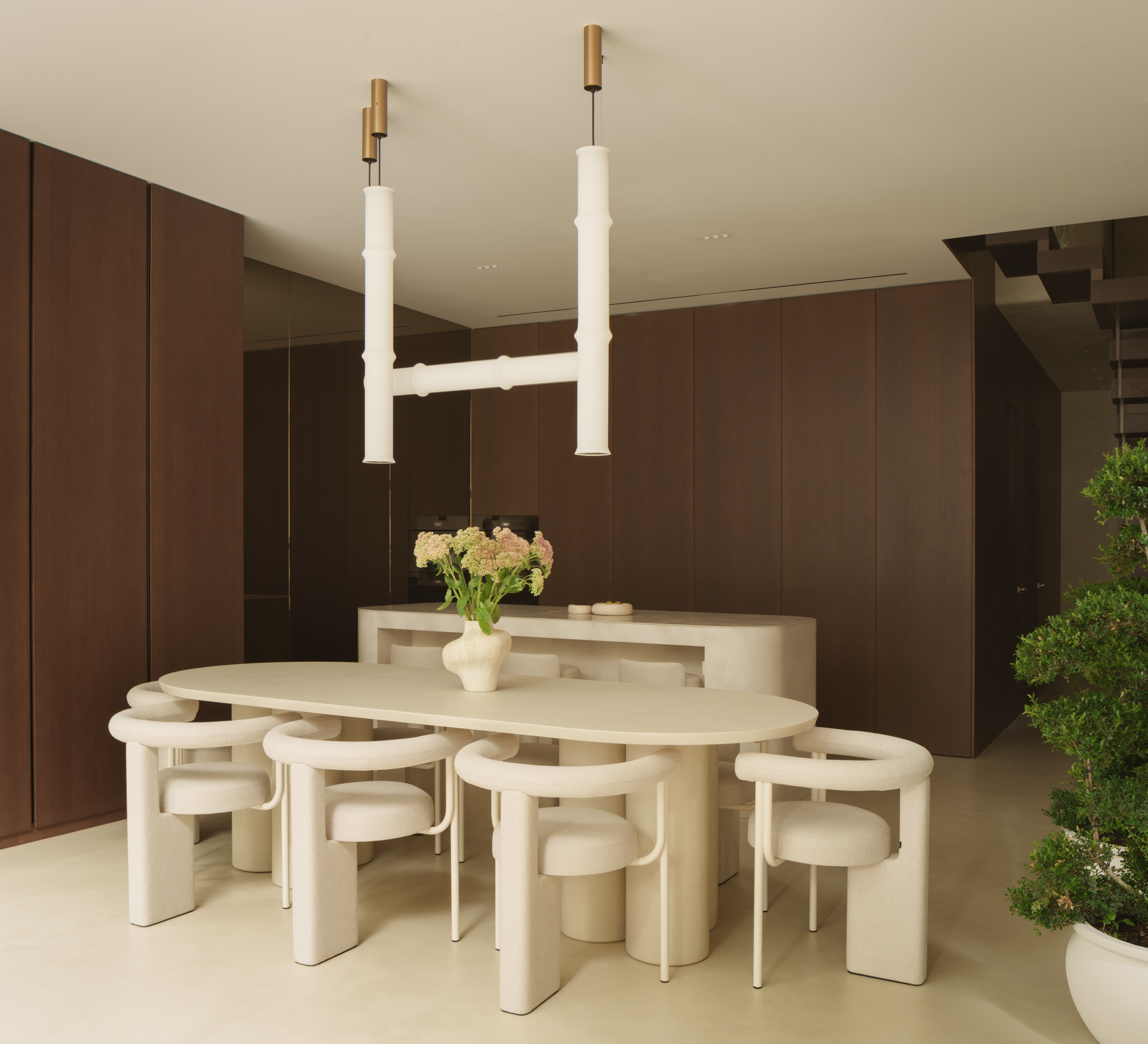
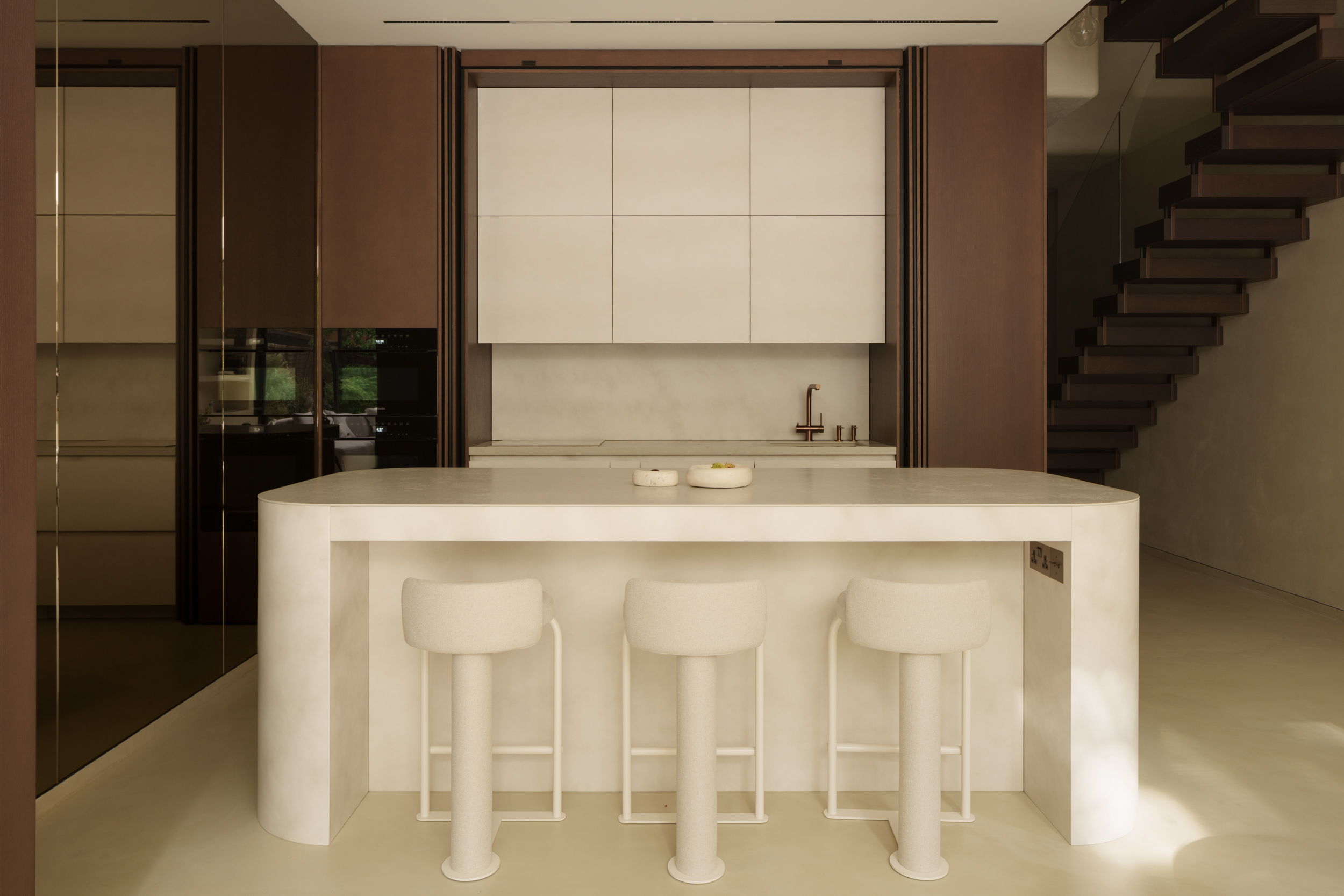
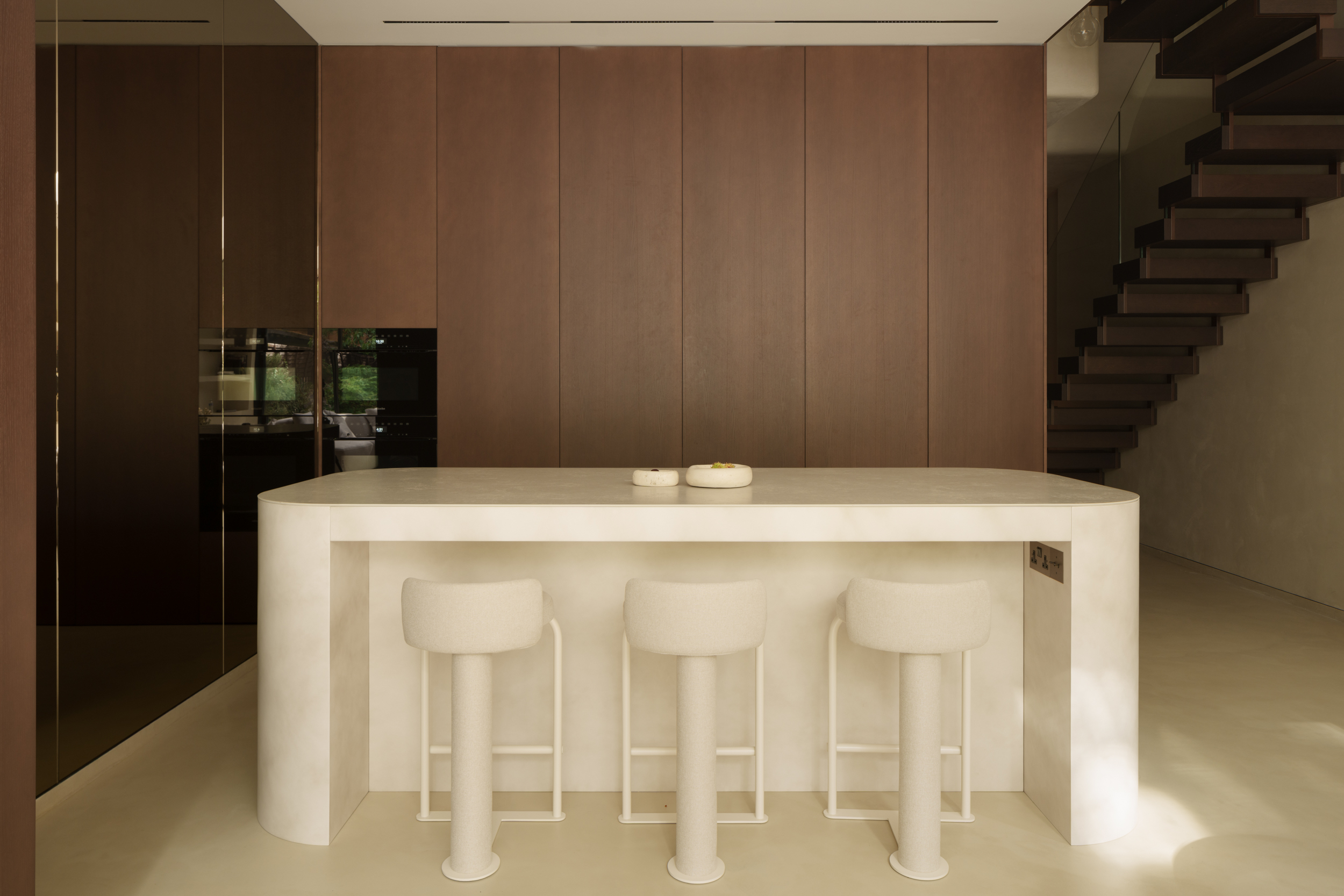
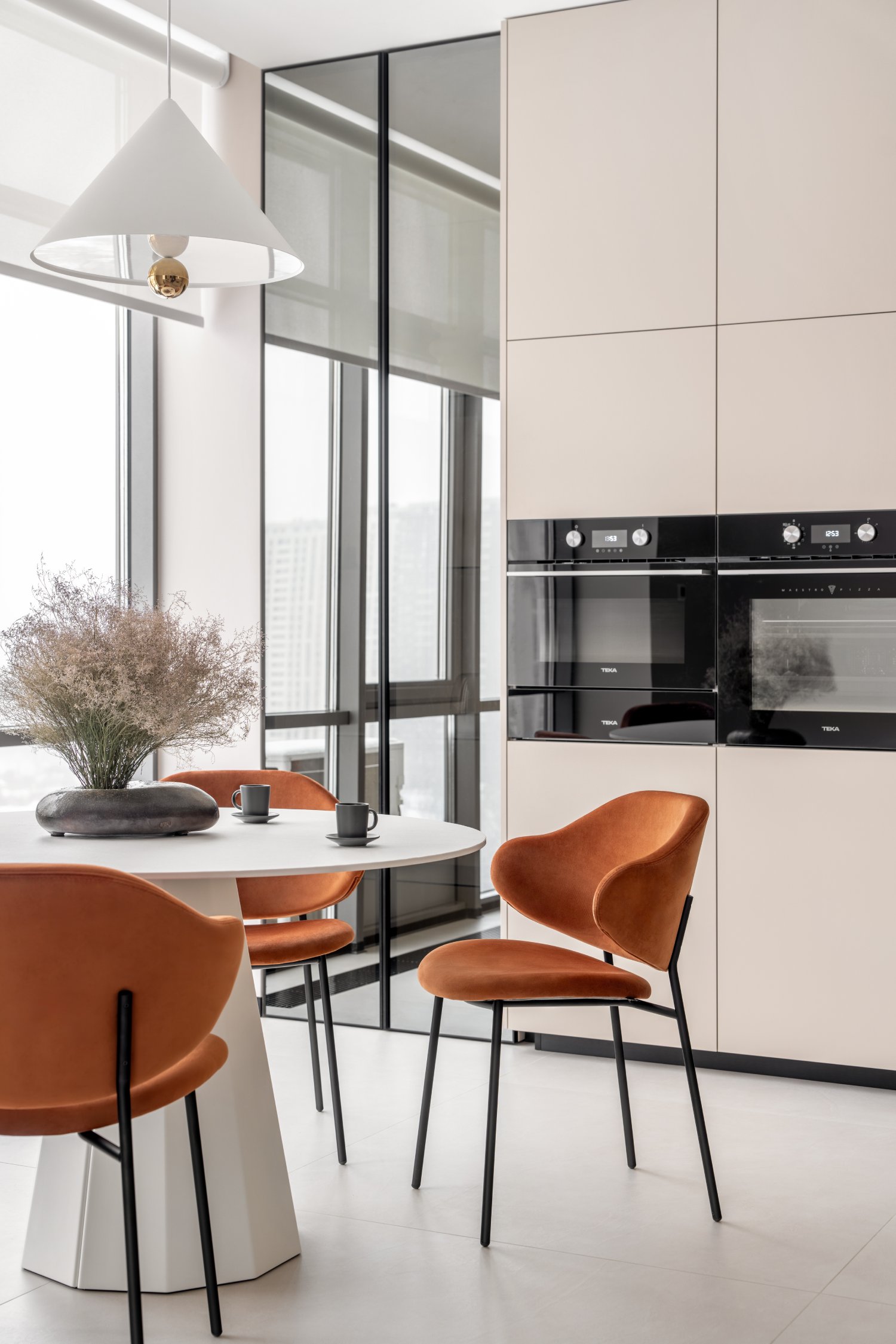
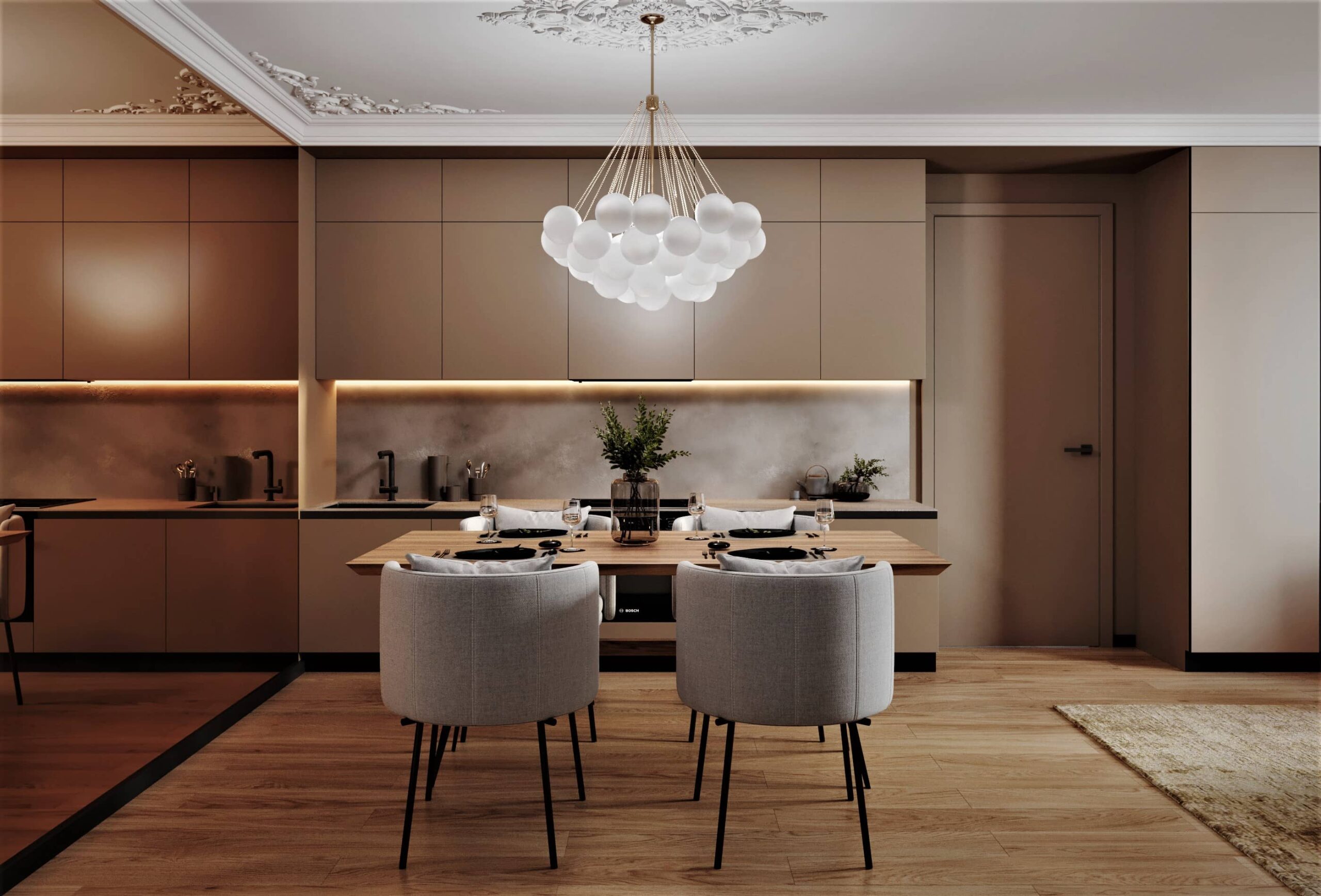
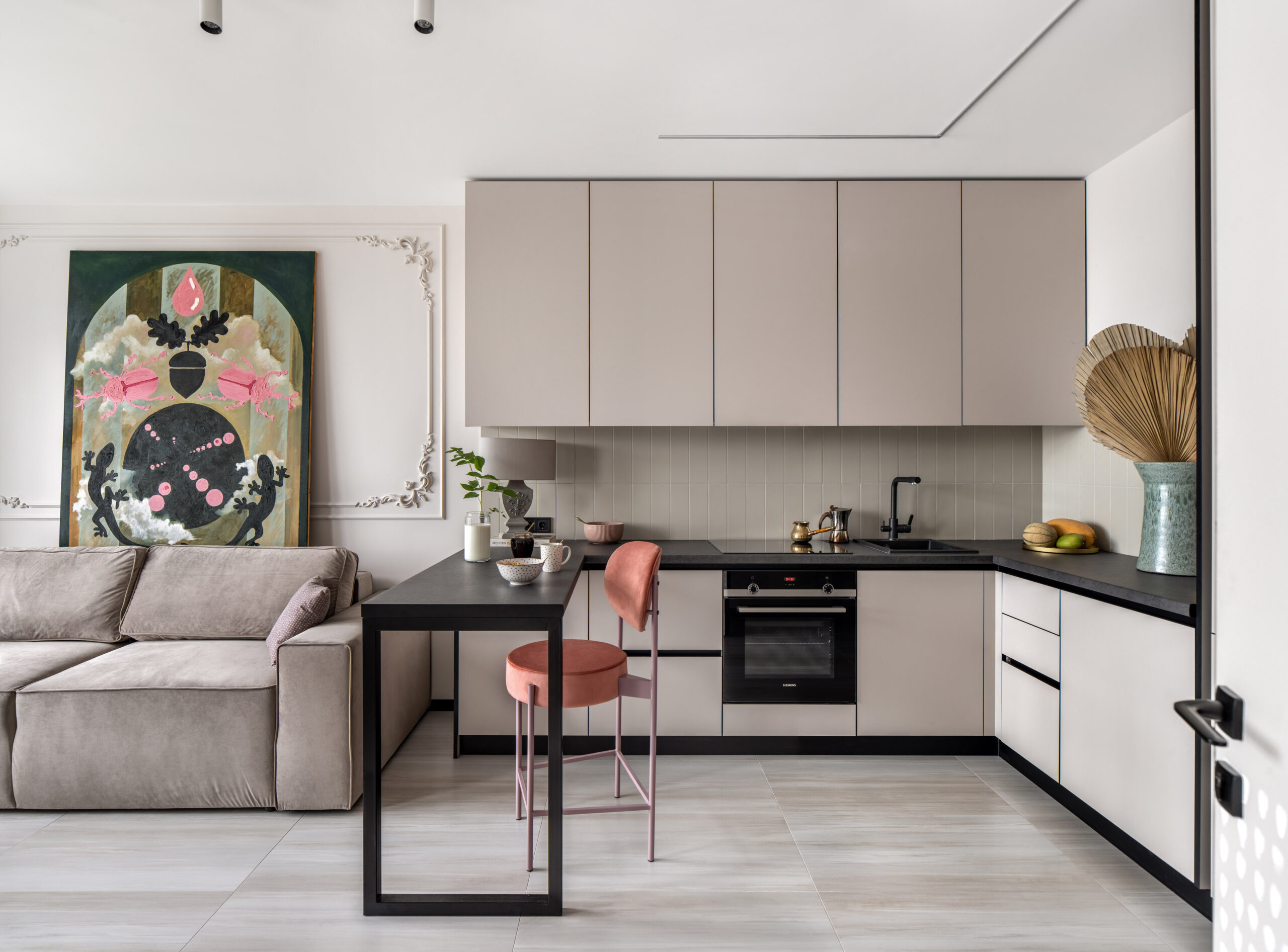
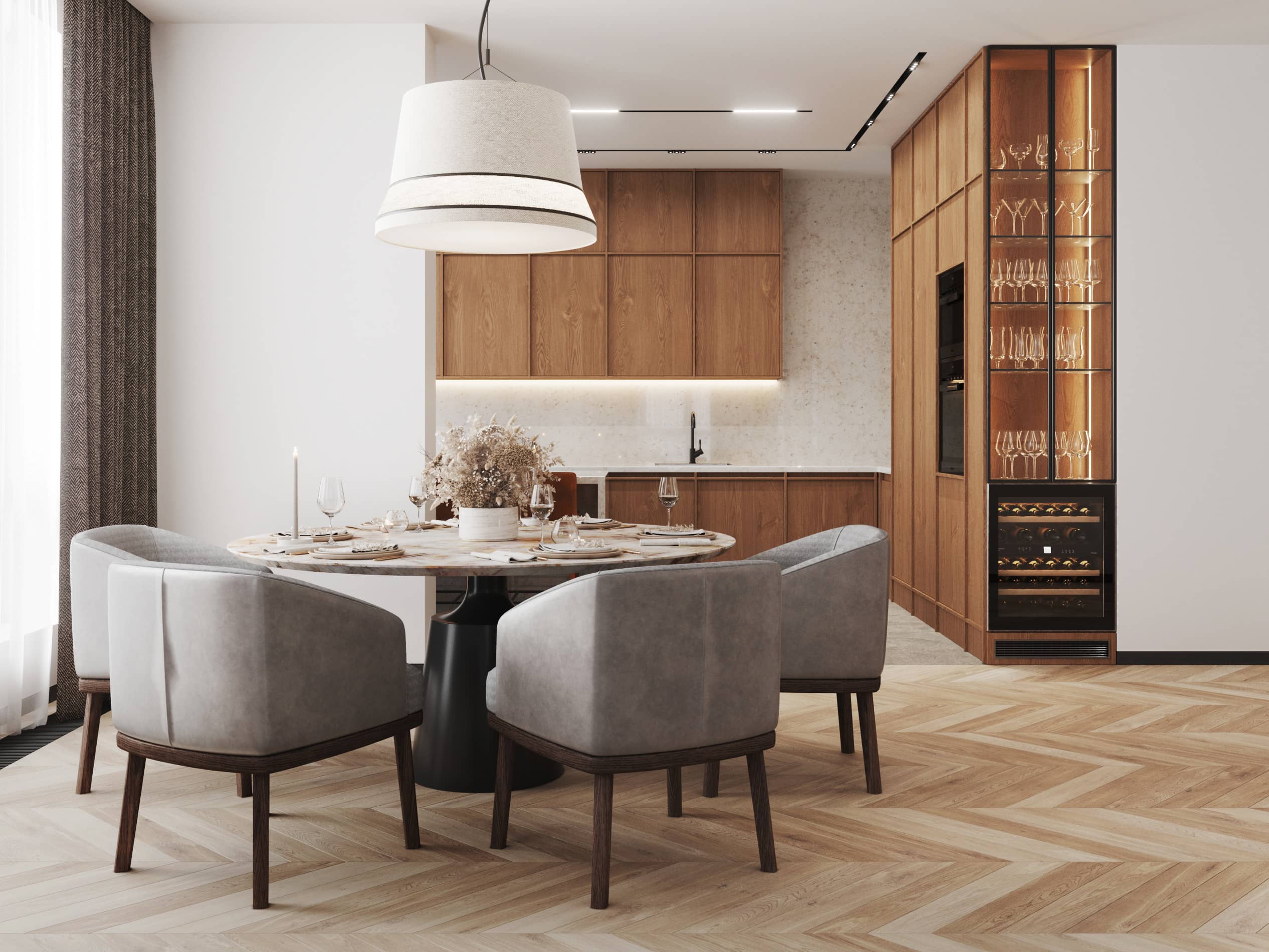
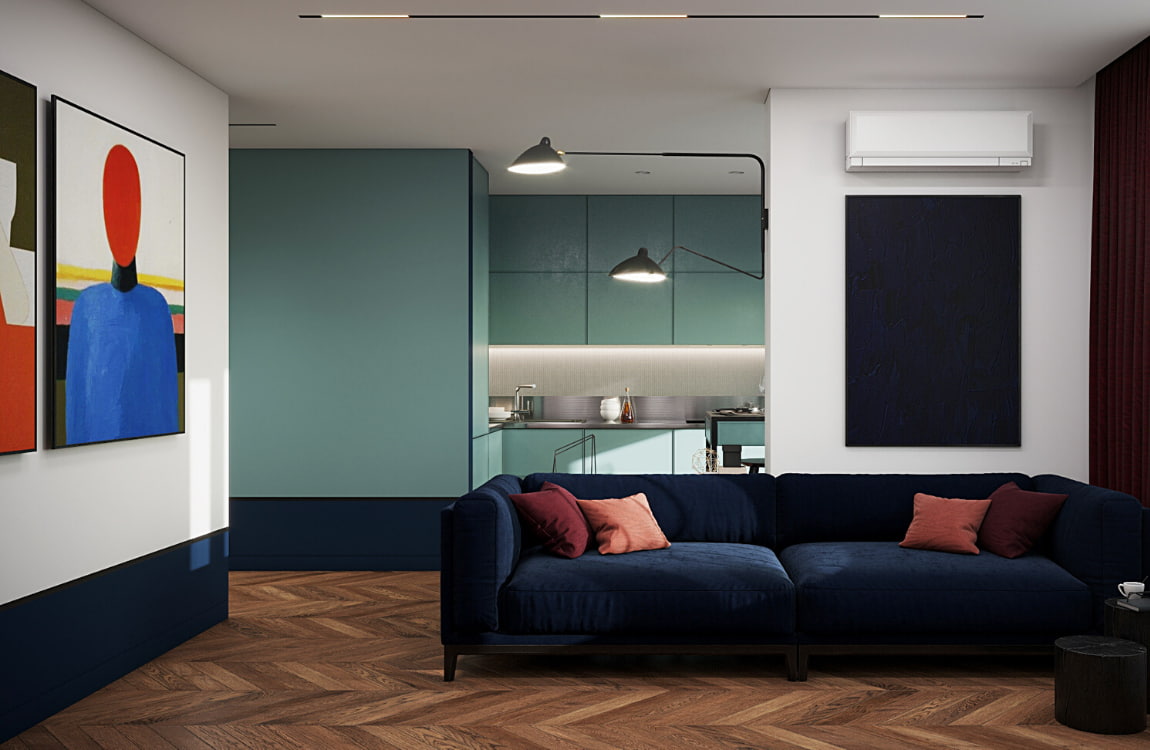
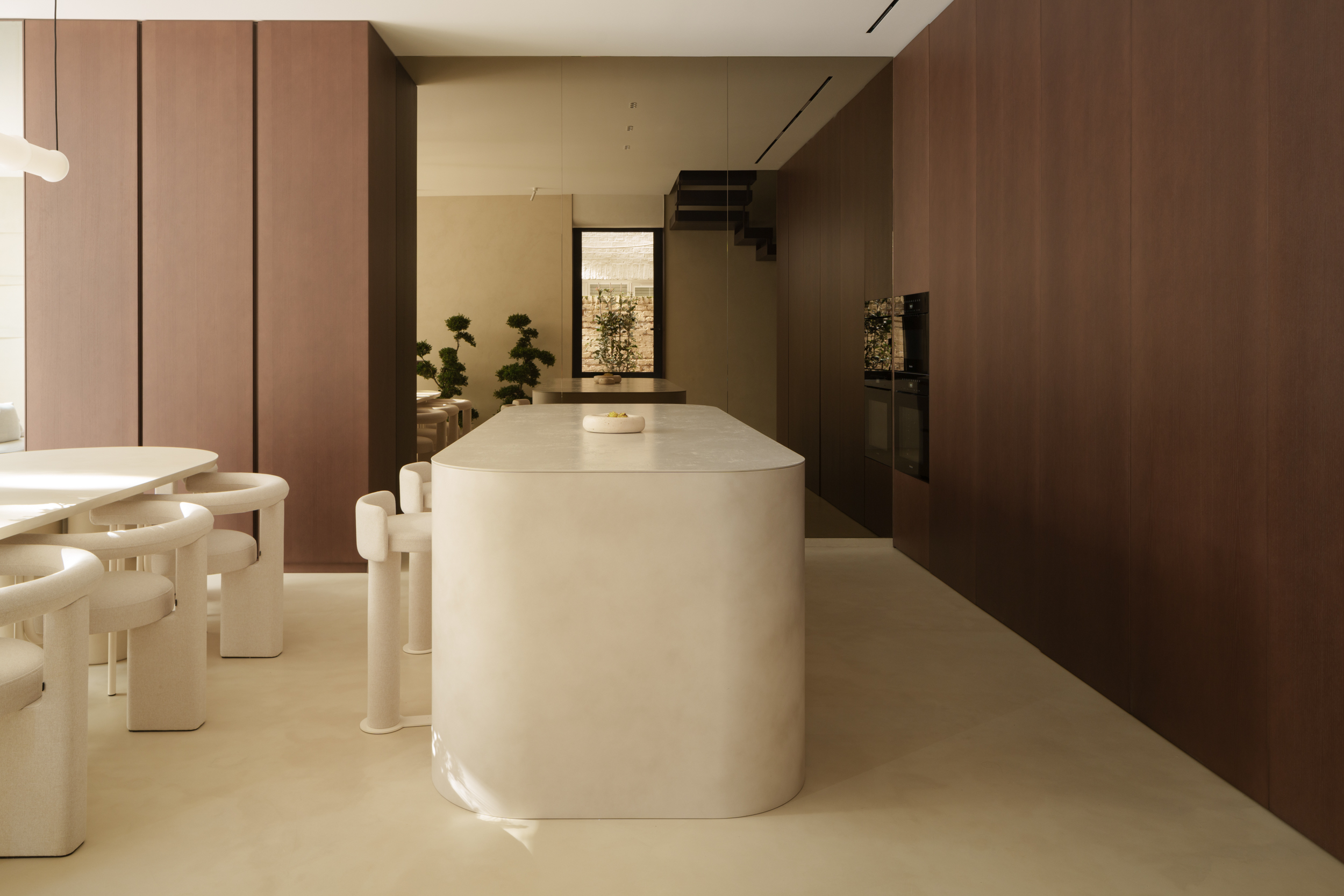
The client envisioned a home in which each space could exist independently. One of the key design challenges was to create a kitchen that could disappear when not in use. The solution came in the form of three-metre-high sliding panels that allow the area to transform swiftly from a functional cooking zone into a serene living space. The open area also accommodates a dining table, a bar-side island, and a multifunctional lounge — all conceived to provide flexibility and effortless adaptation to daily life and mood.
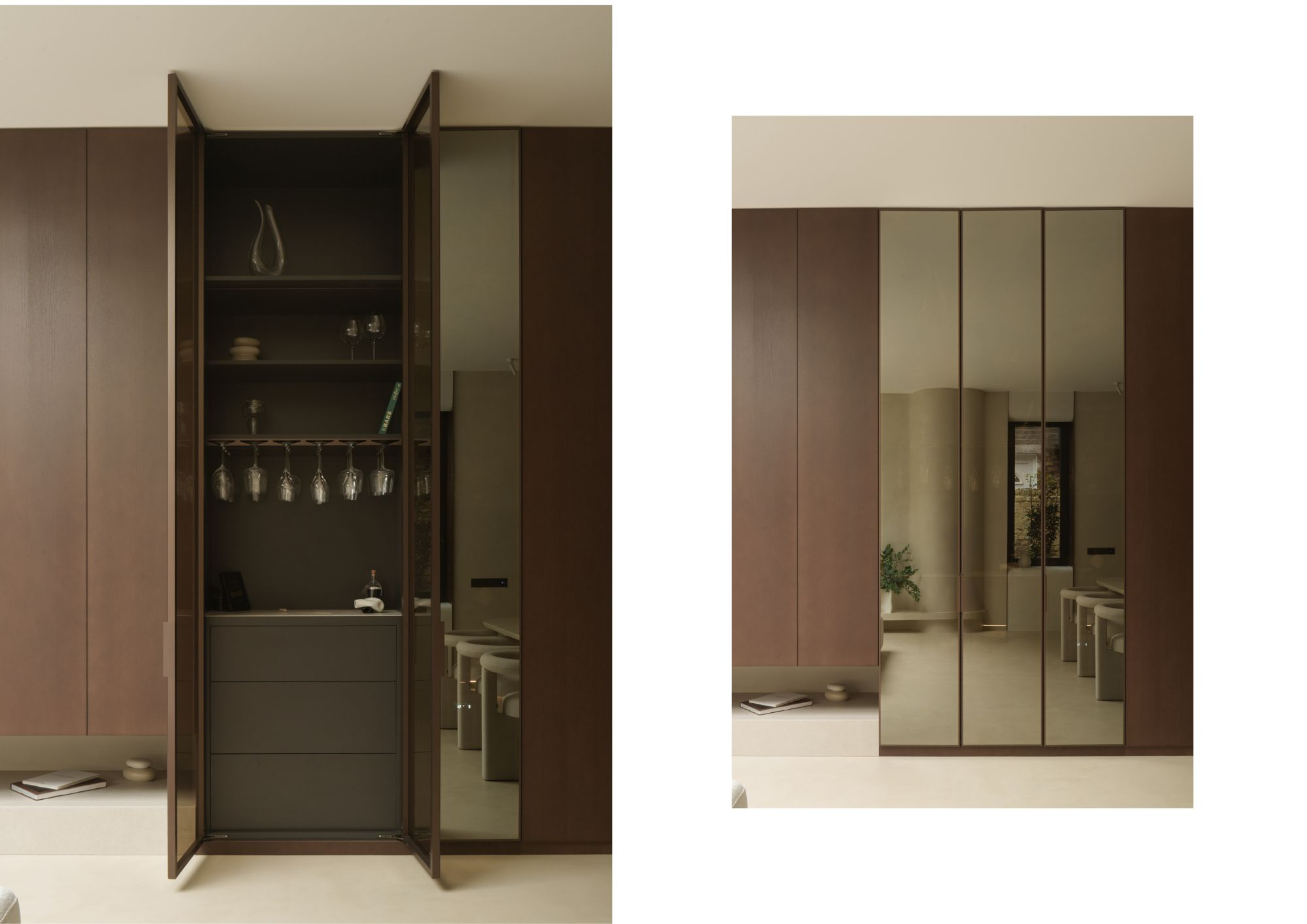
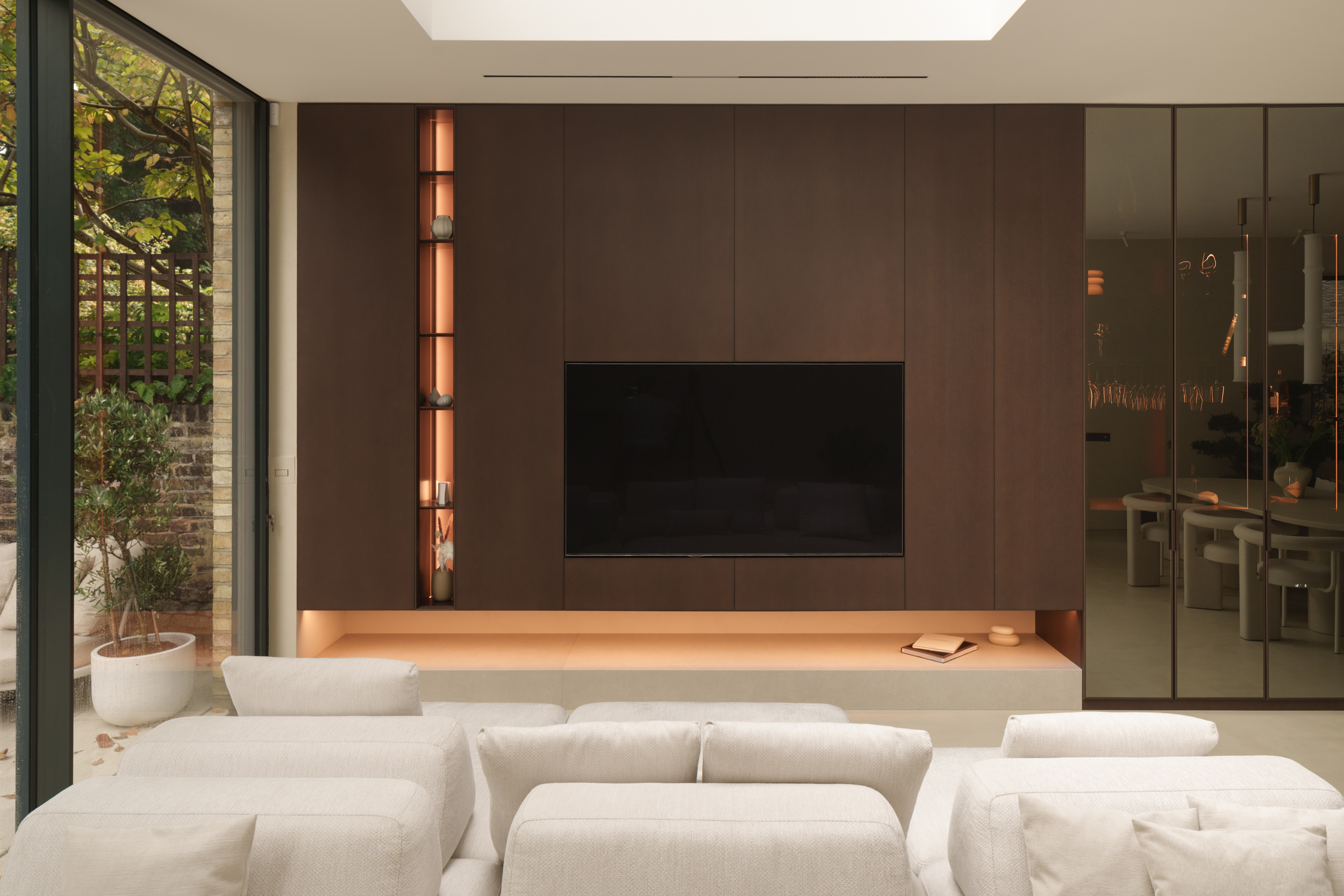
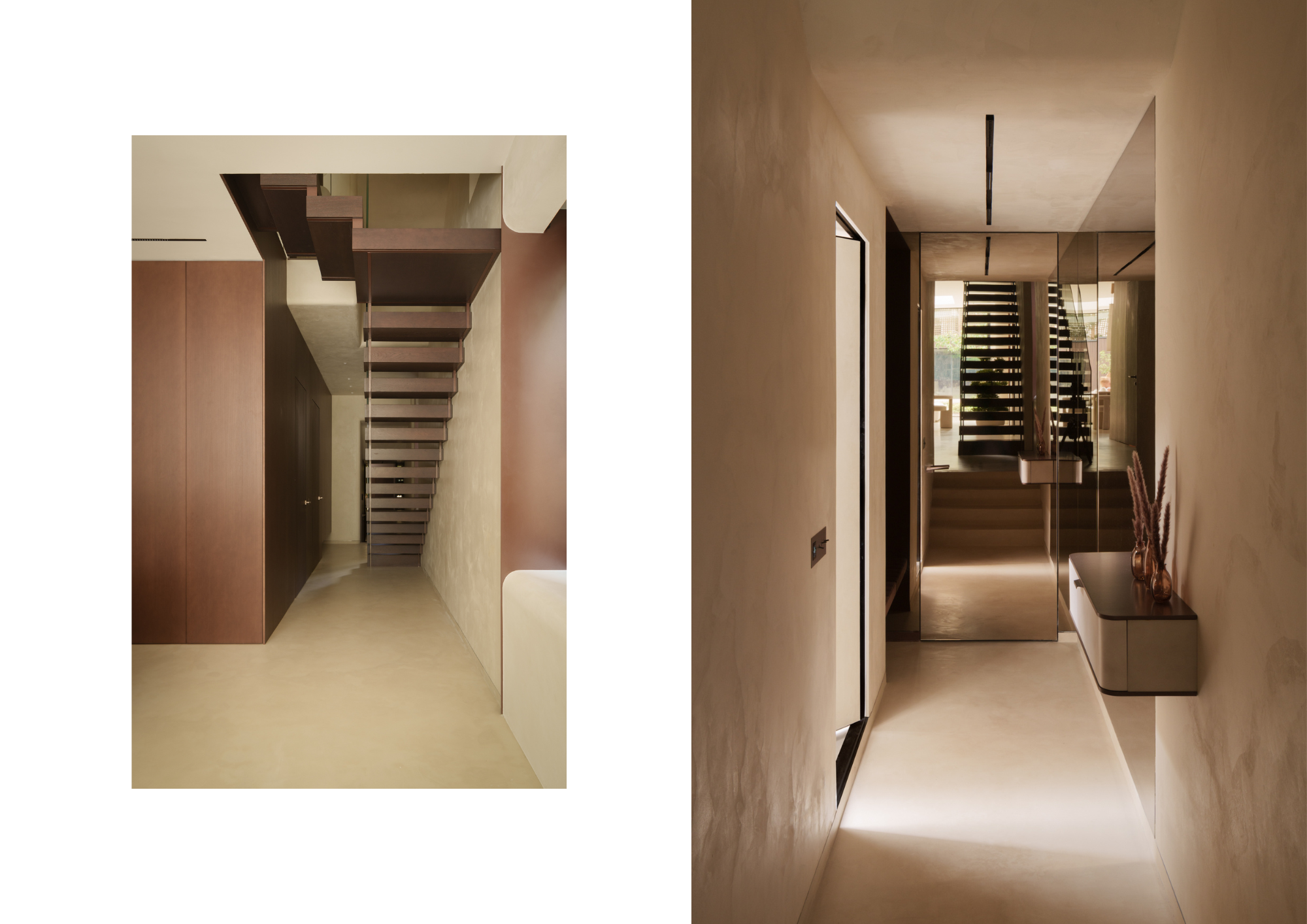
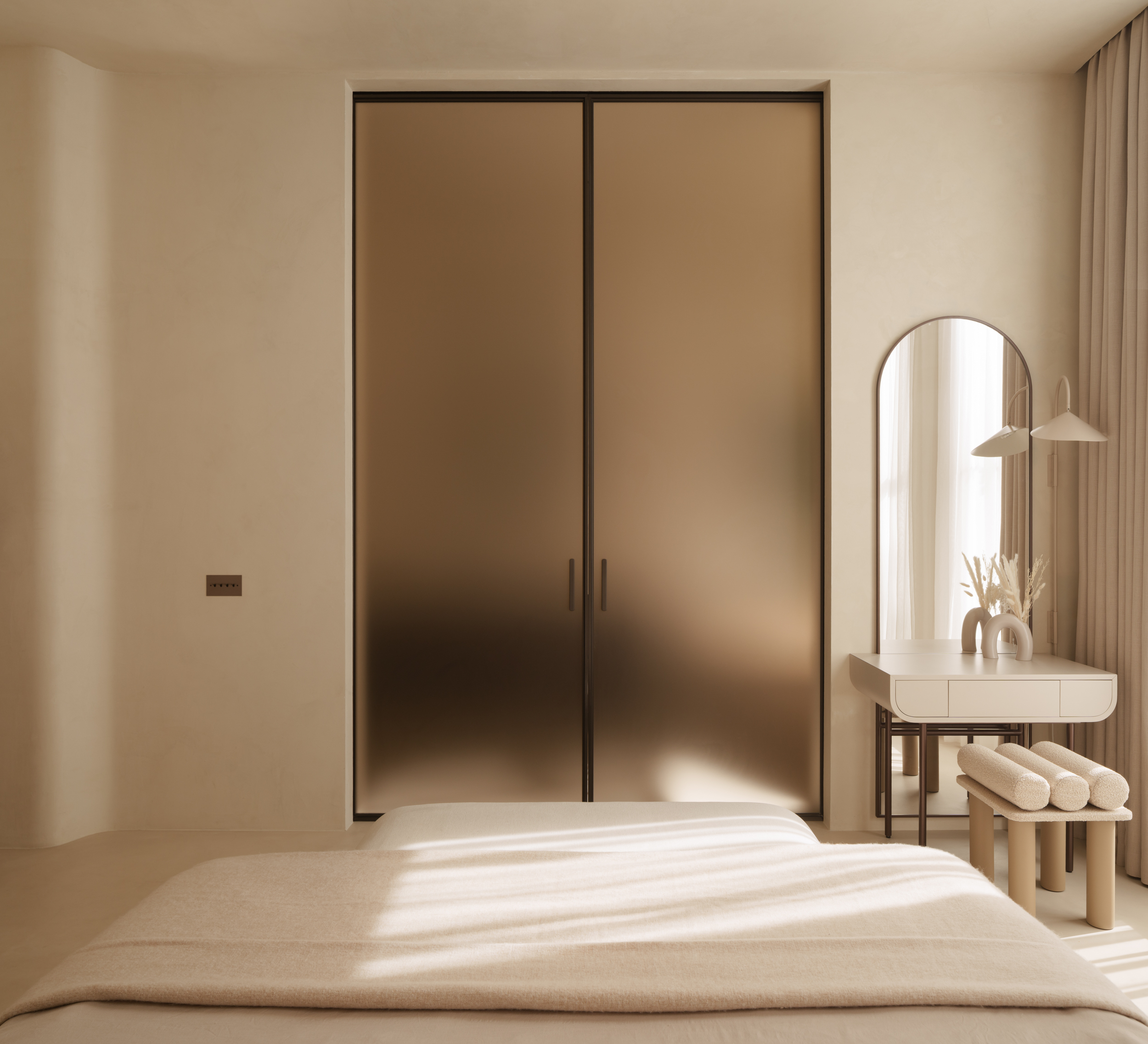
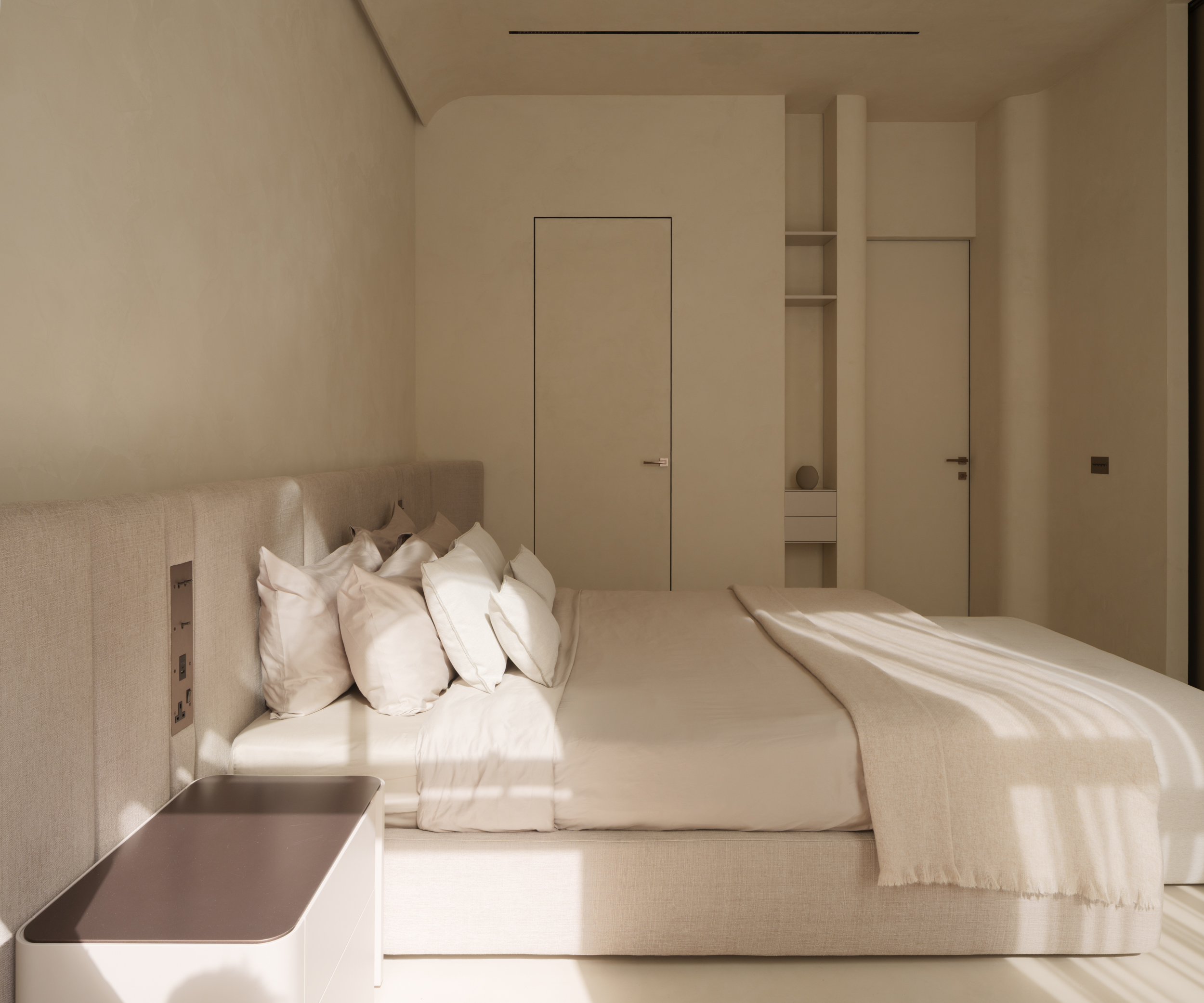
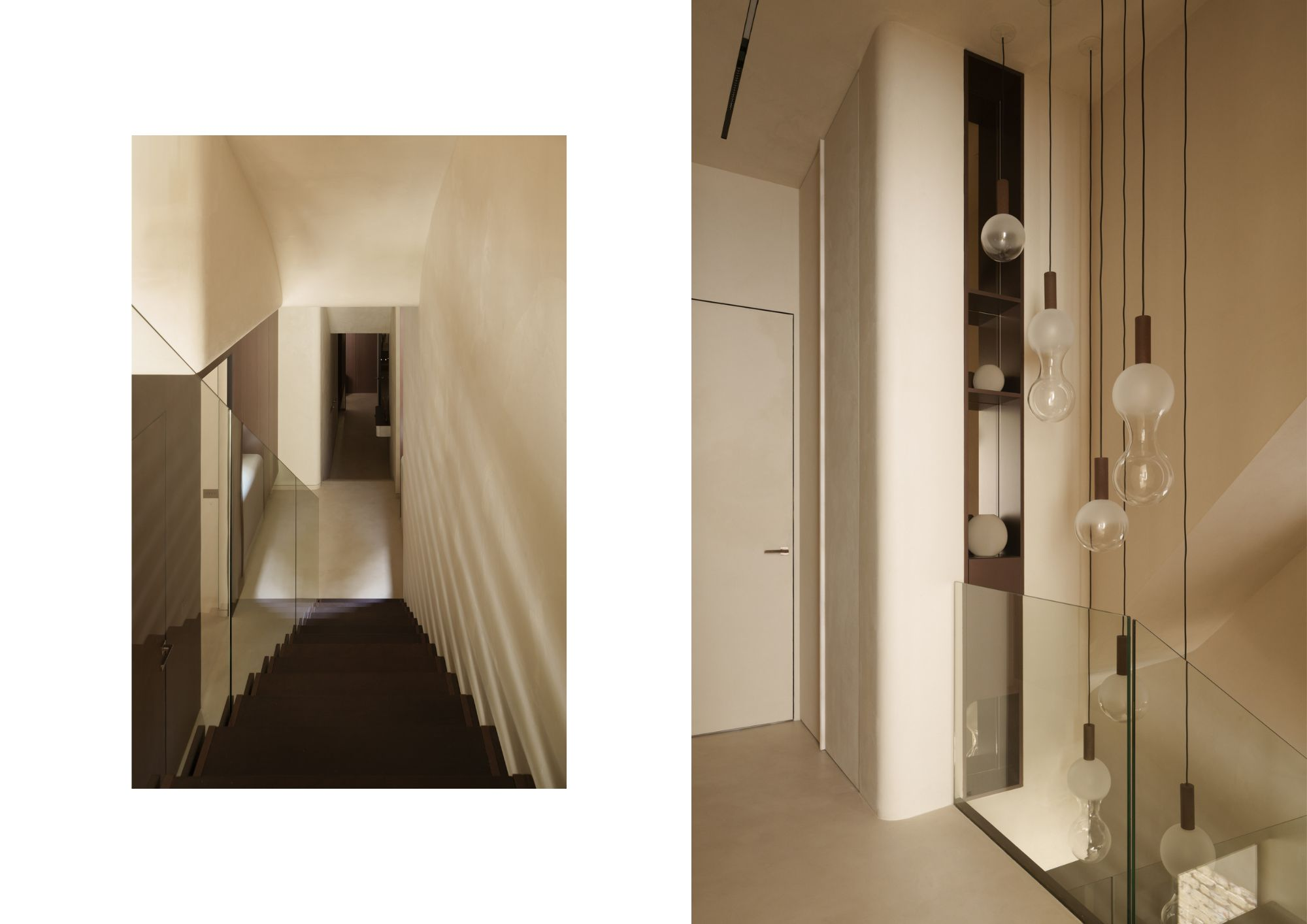
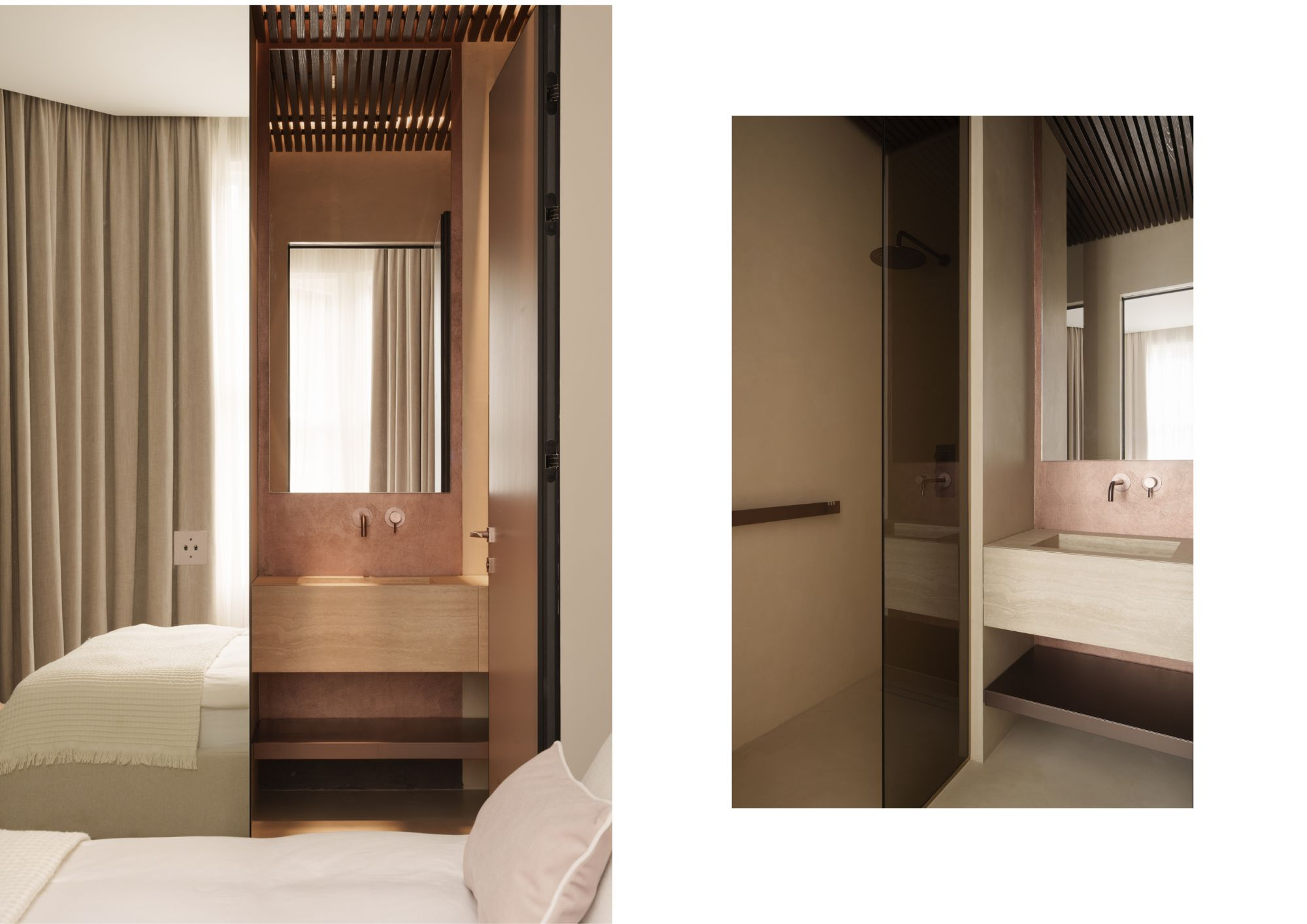
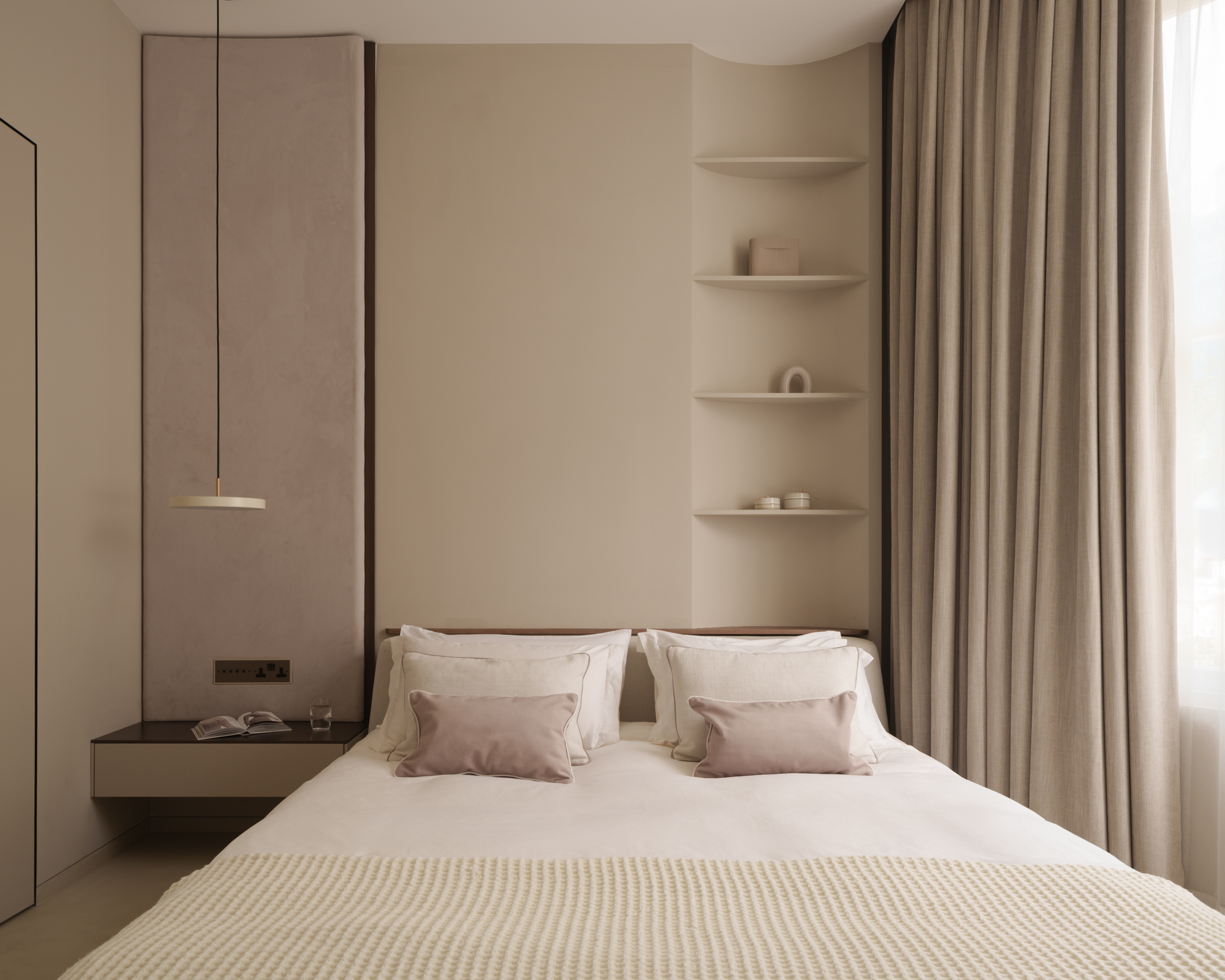
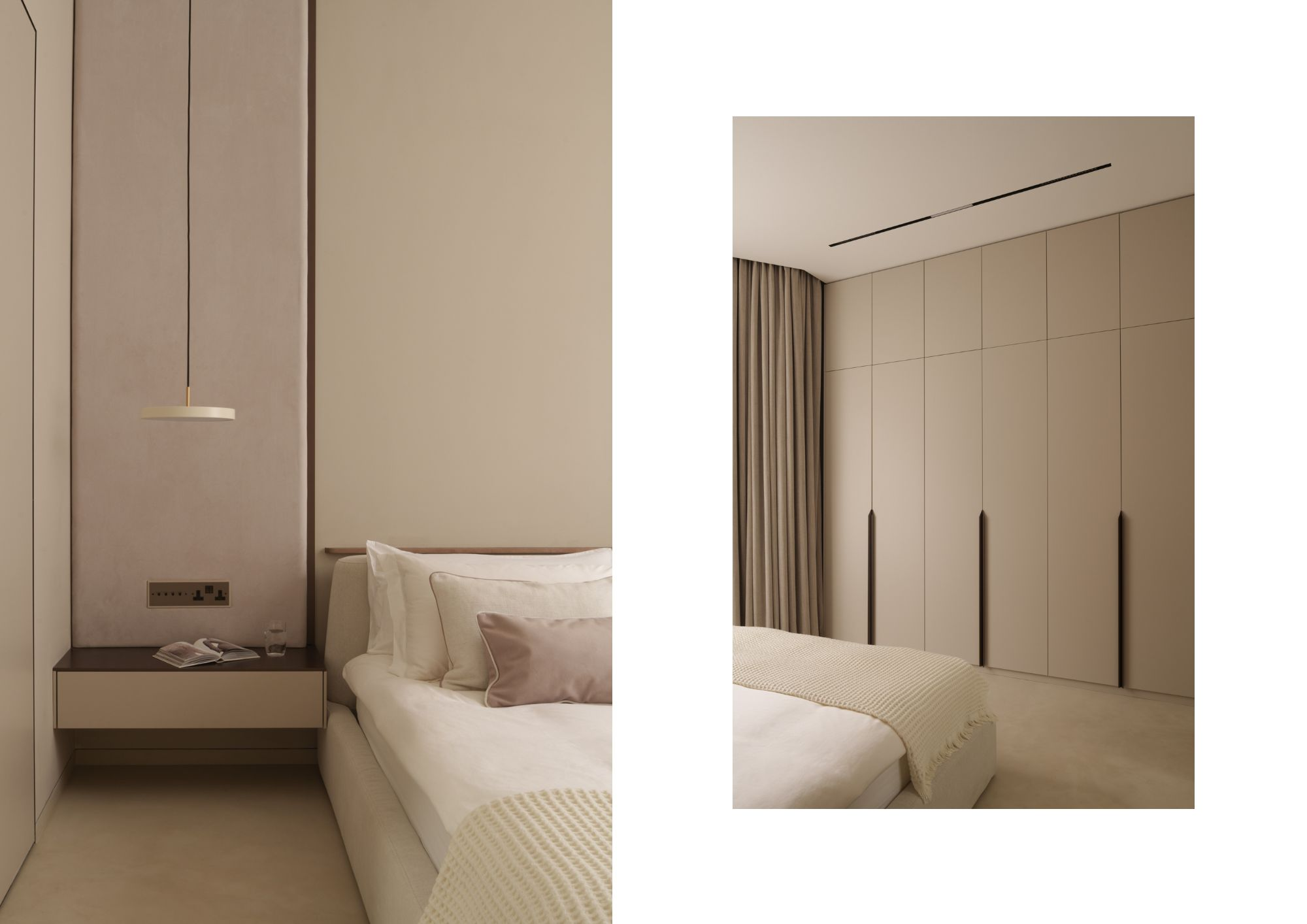
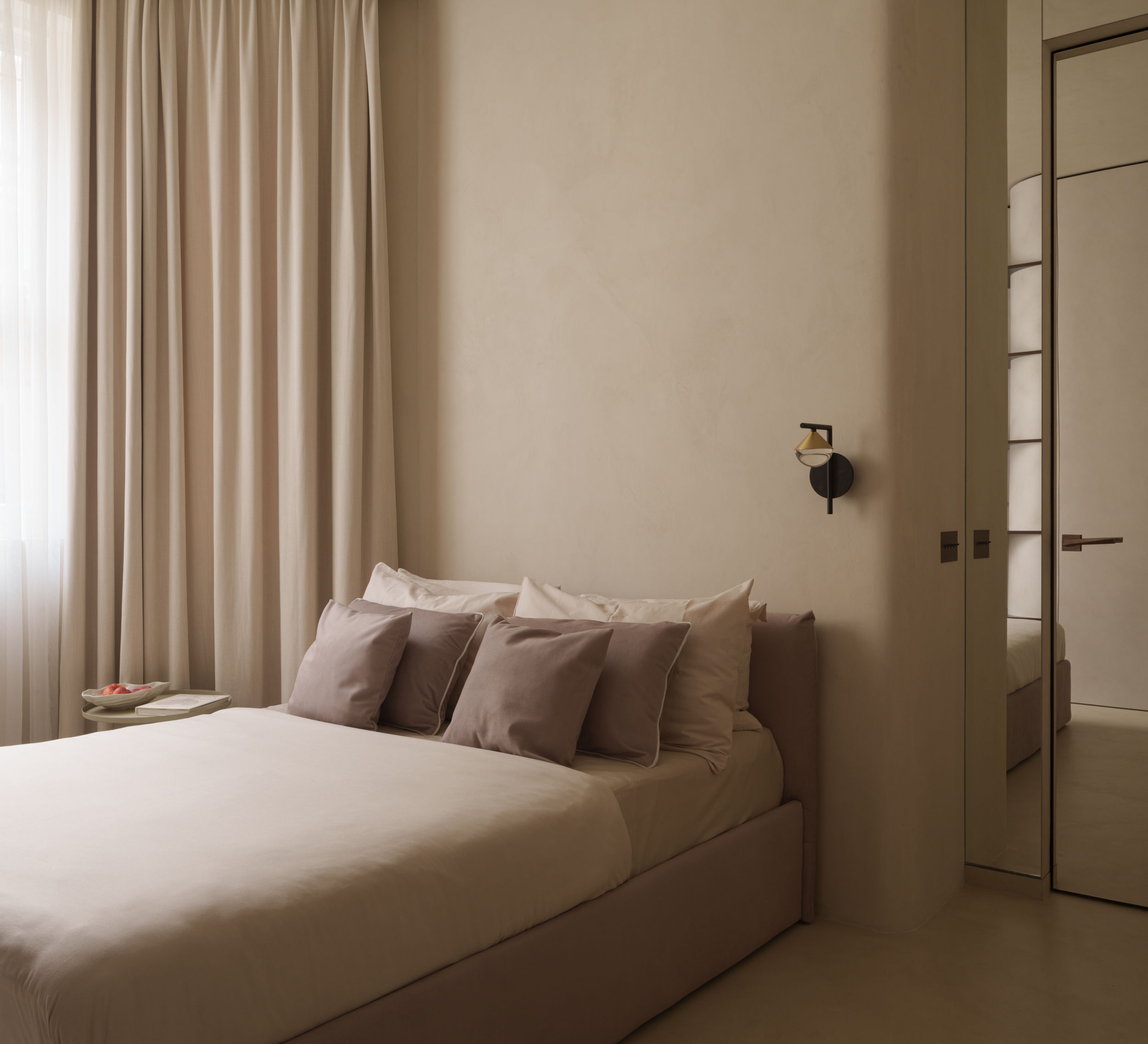
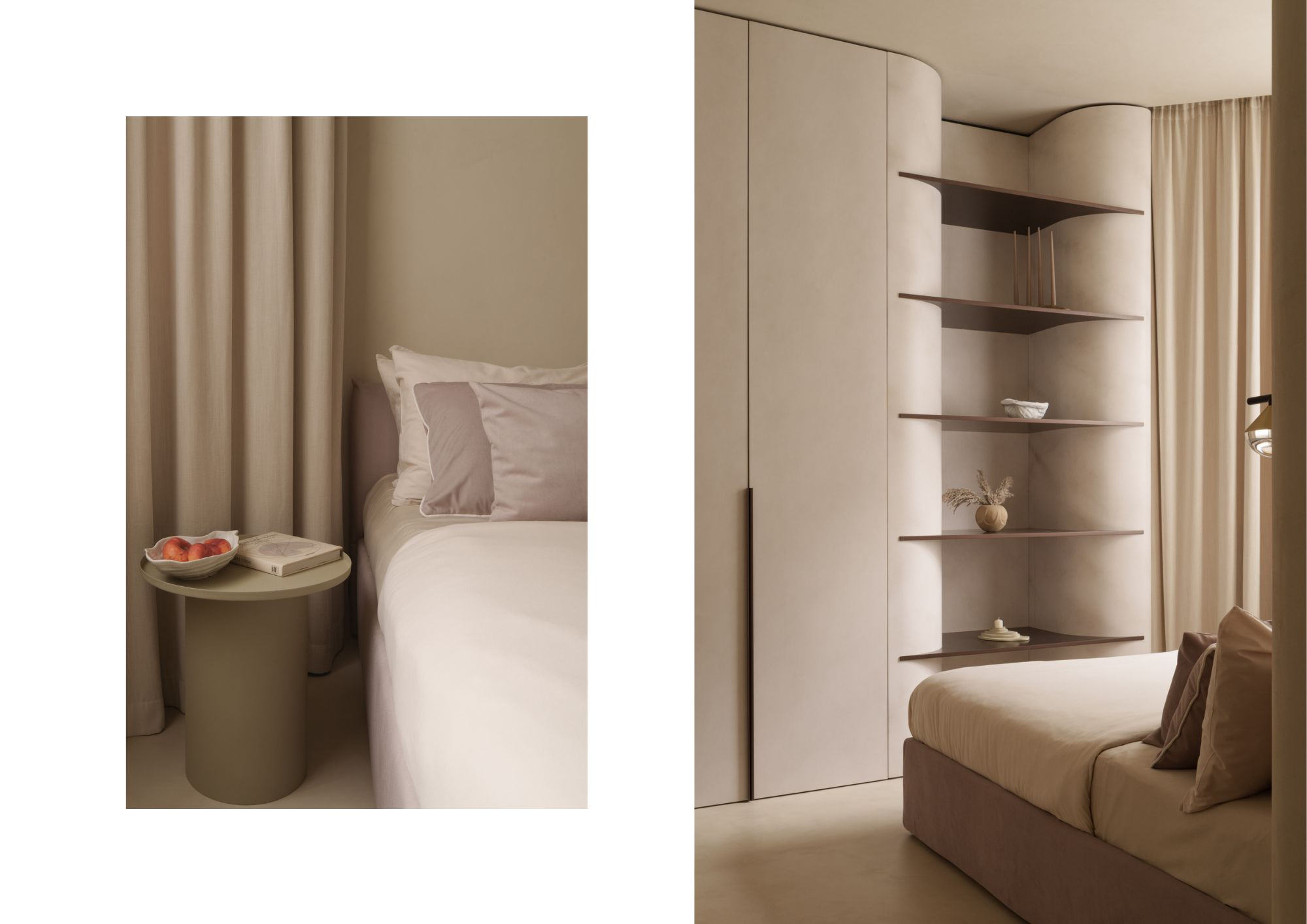
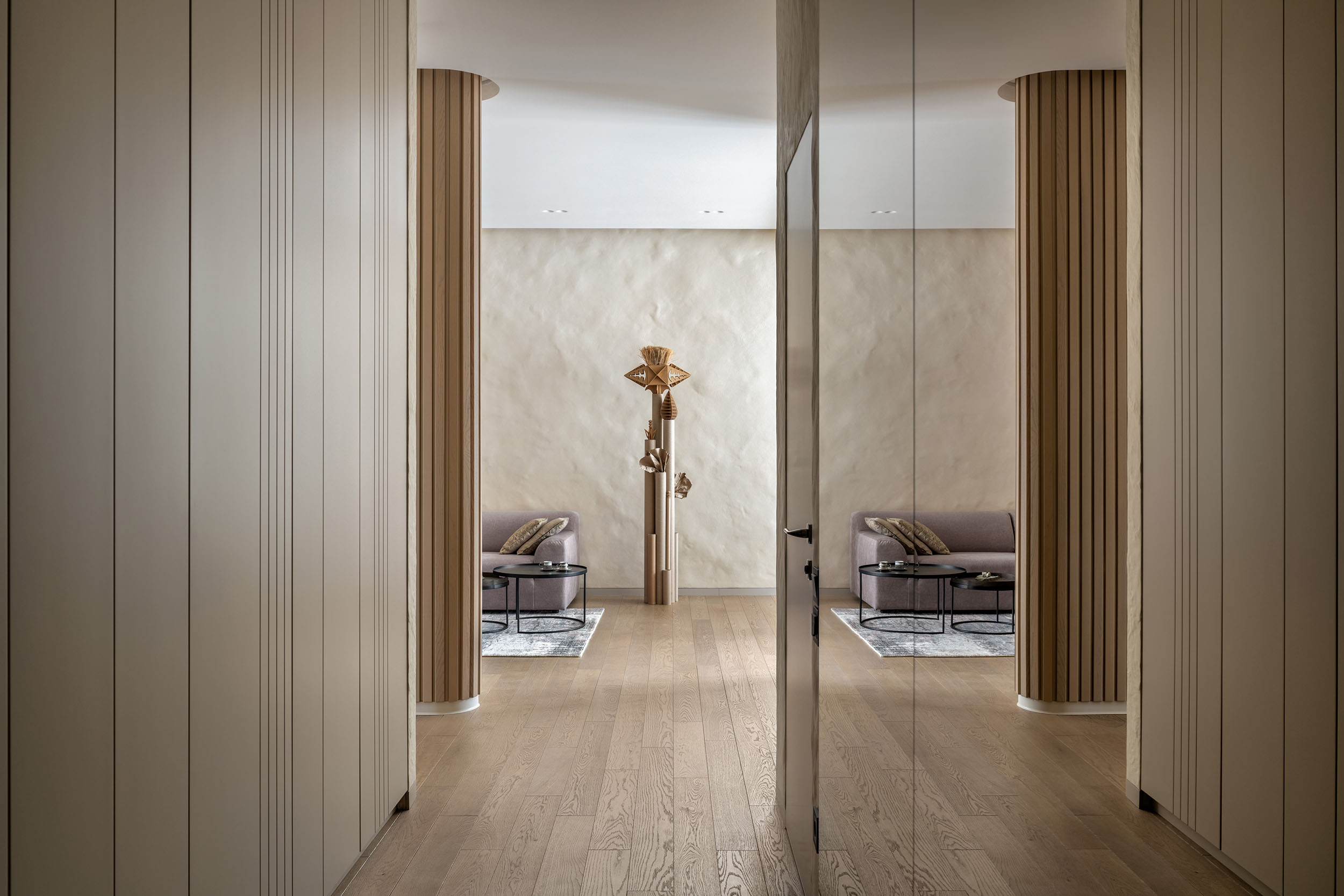
Architectural detailing plays a discreet yet vital role. Hidden doors concealed behind timber panels or mirrored walls, recessed skirting boards, built-in wardrobes, a lightweight staircase, and layered lighting scenarios ensure visual clarity and ease of movement. Everywhere, small details fade into the background, allowing clean lines and generous surfaces to take centre stage.
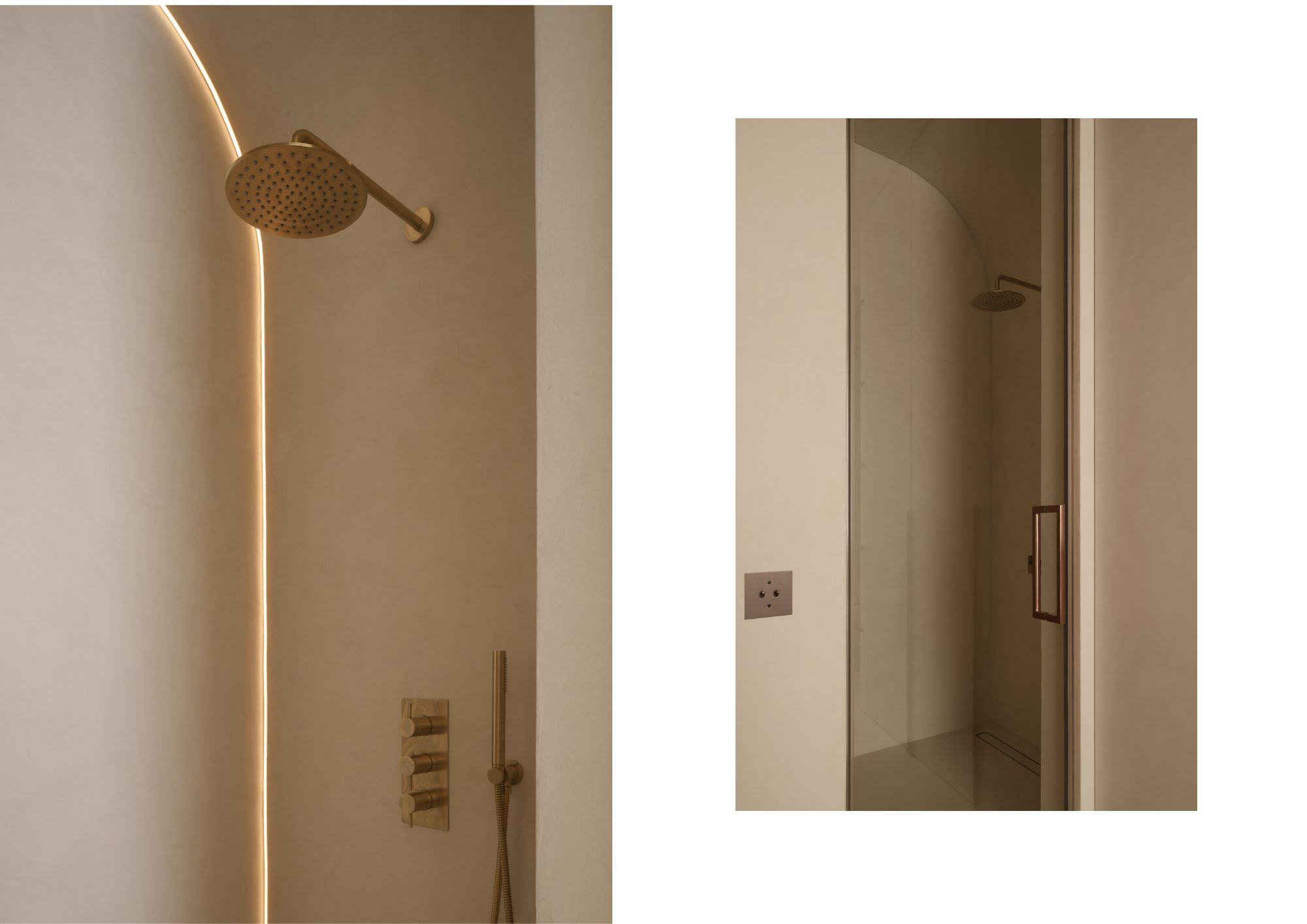
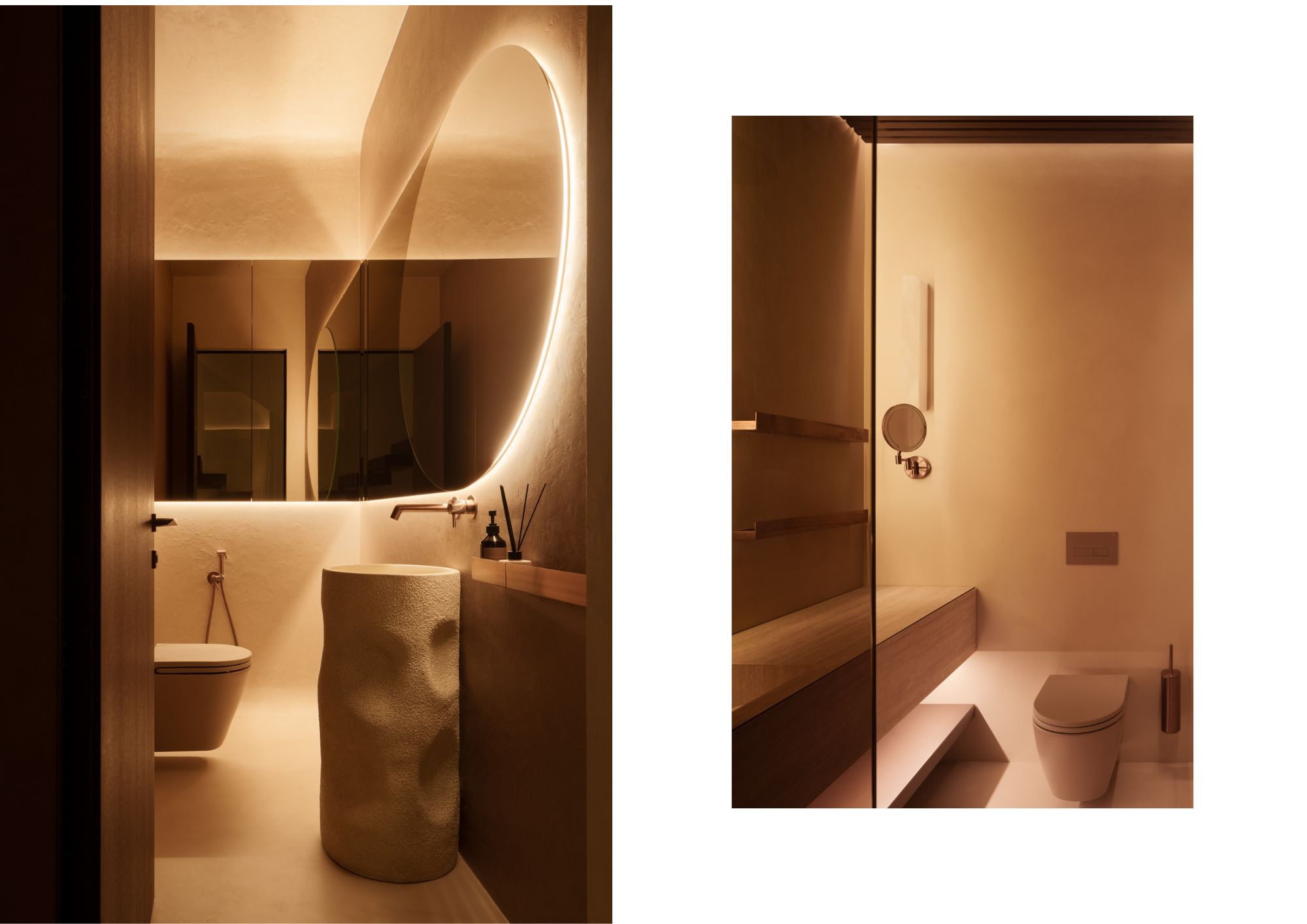
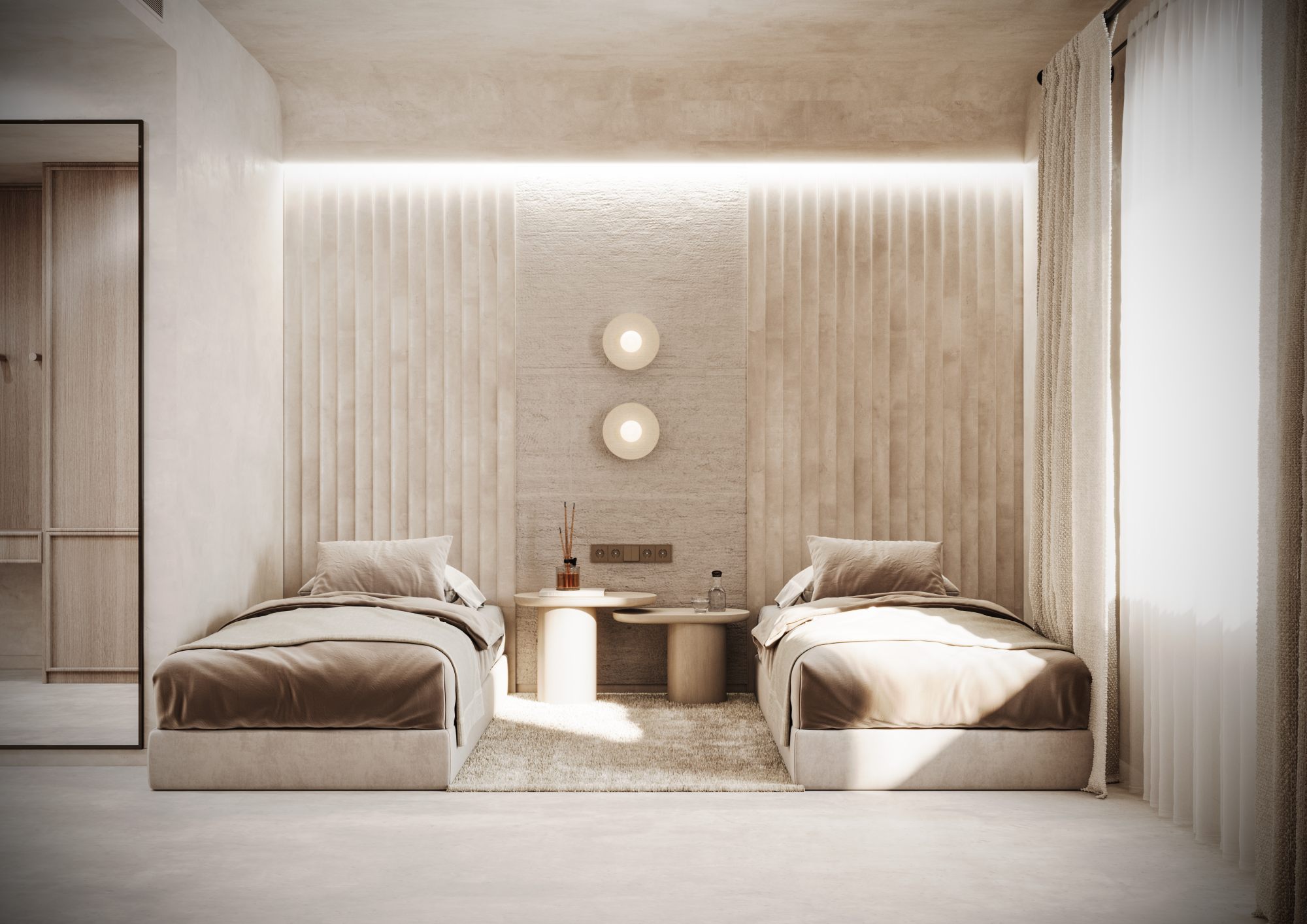
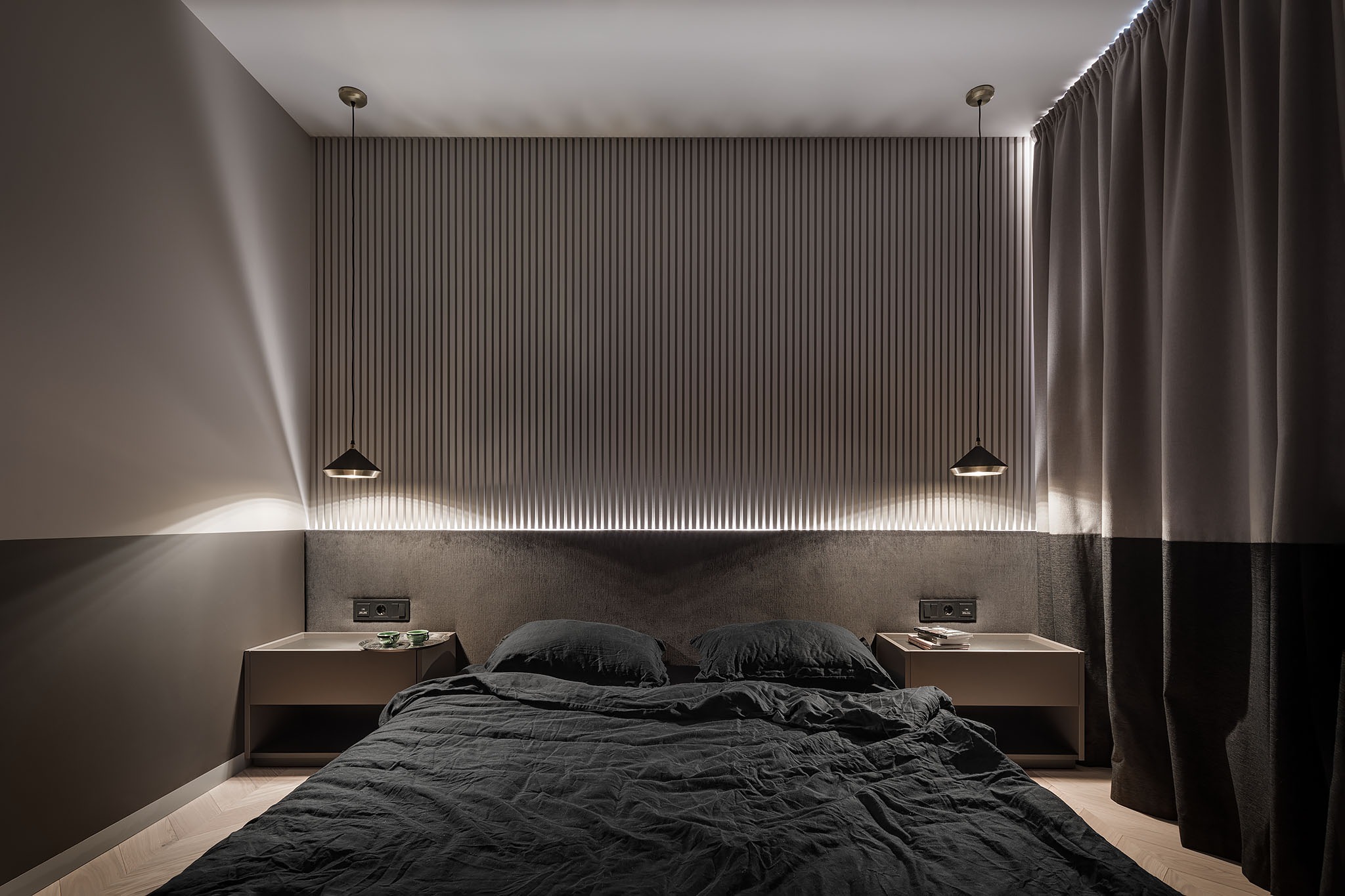
Motion-sensitive lighting integrated into skirting boards, wardrobes, and functional zones in the corridor, kitchen, and bathrooms enhances comfort and creates a soft, ambient glow. Mirrored planes amplify natural light, subtly enlarging the sense of space.
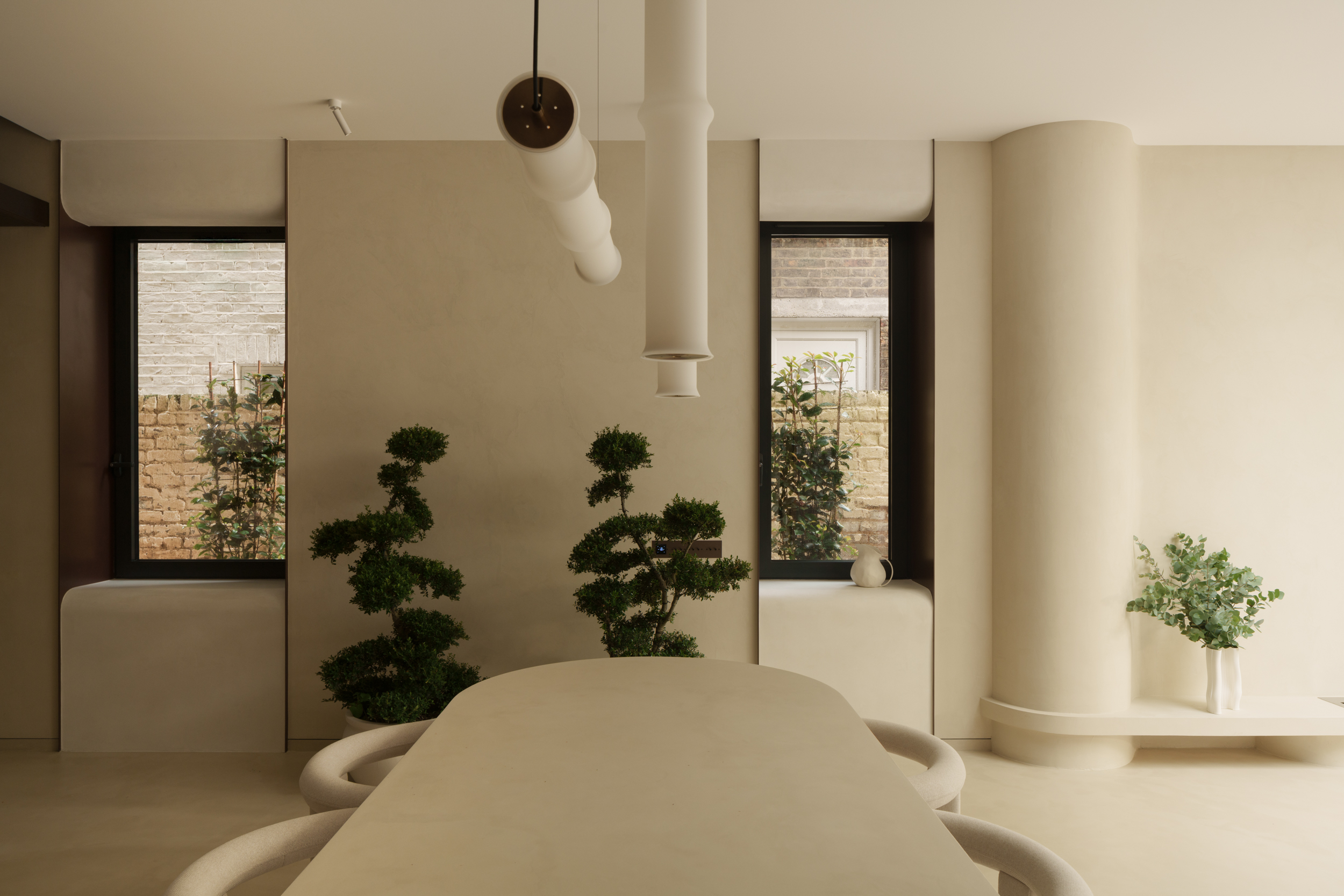
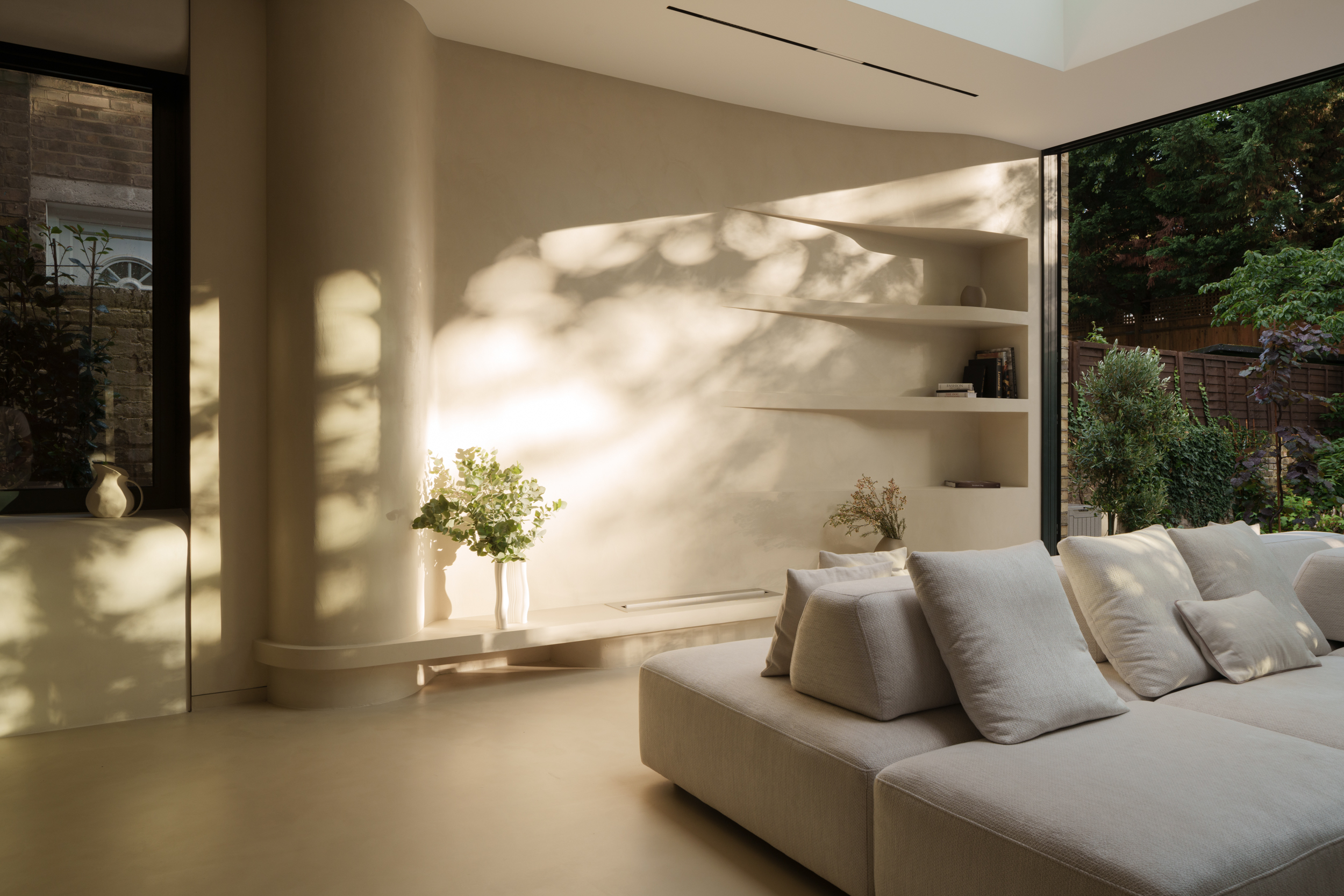
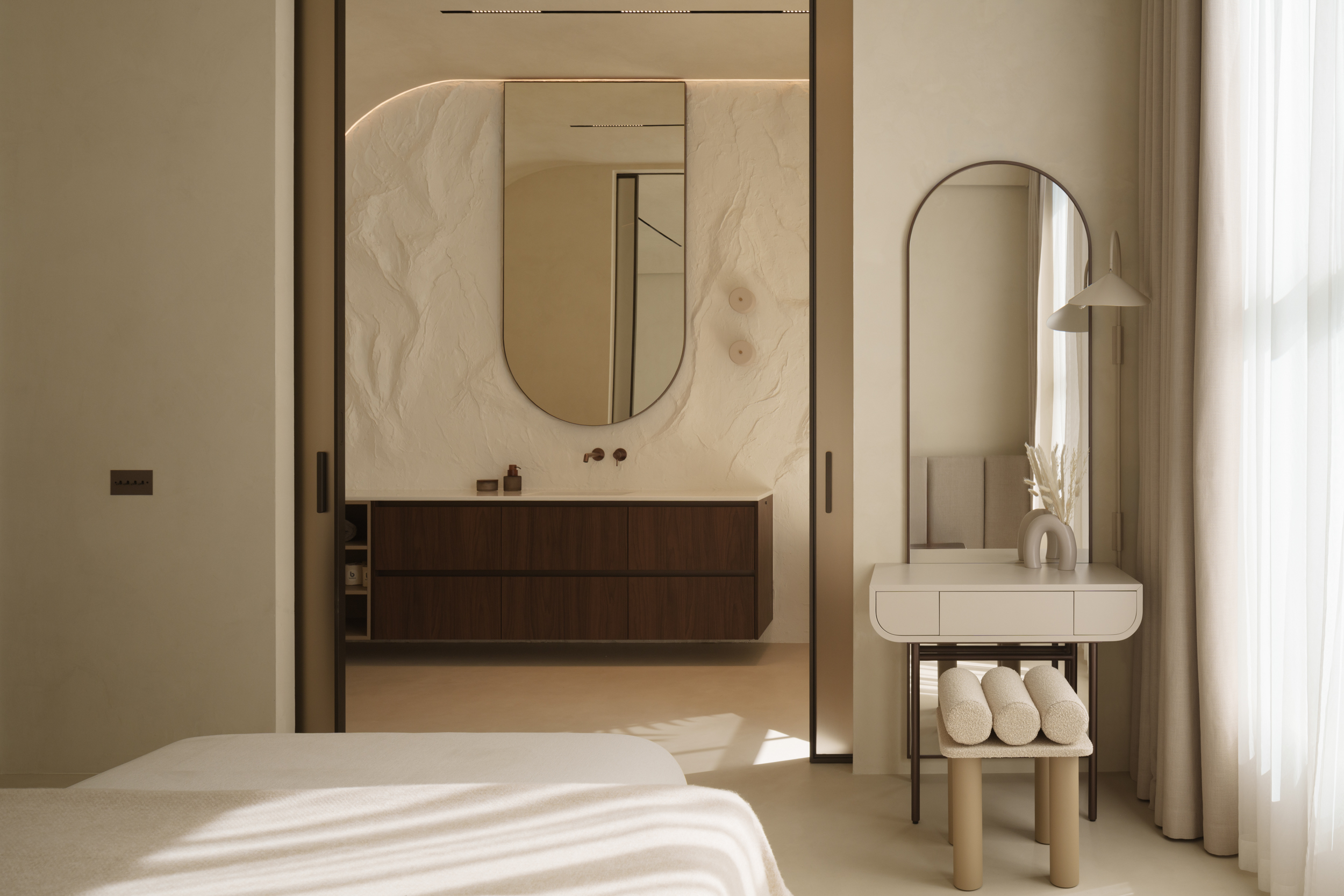
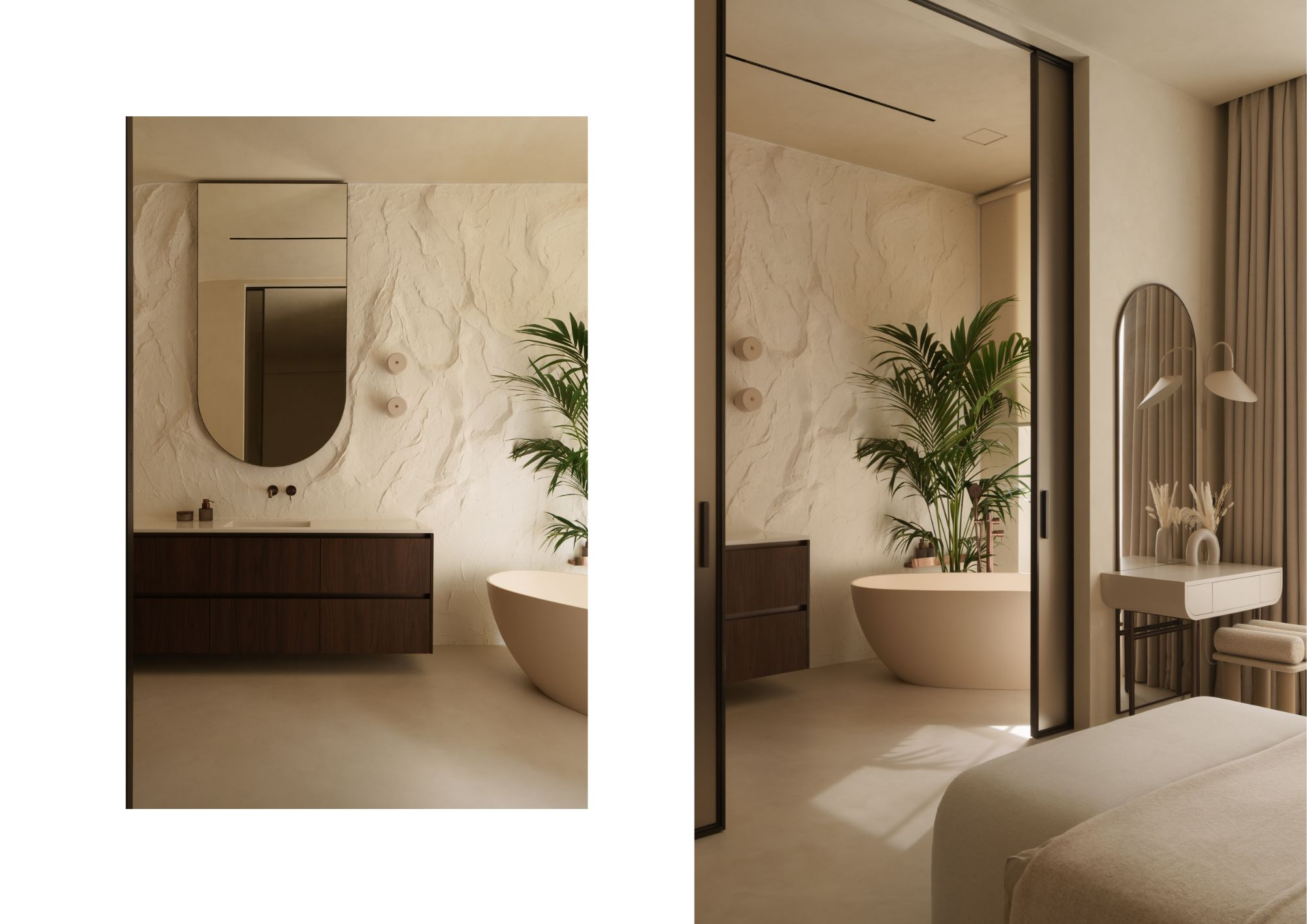
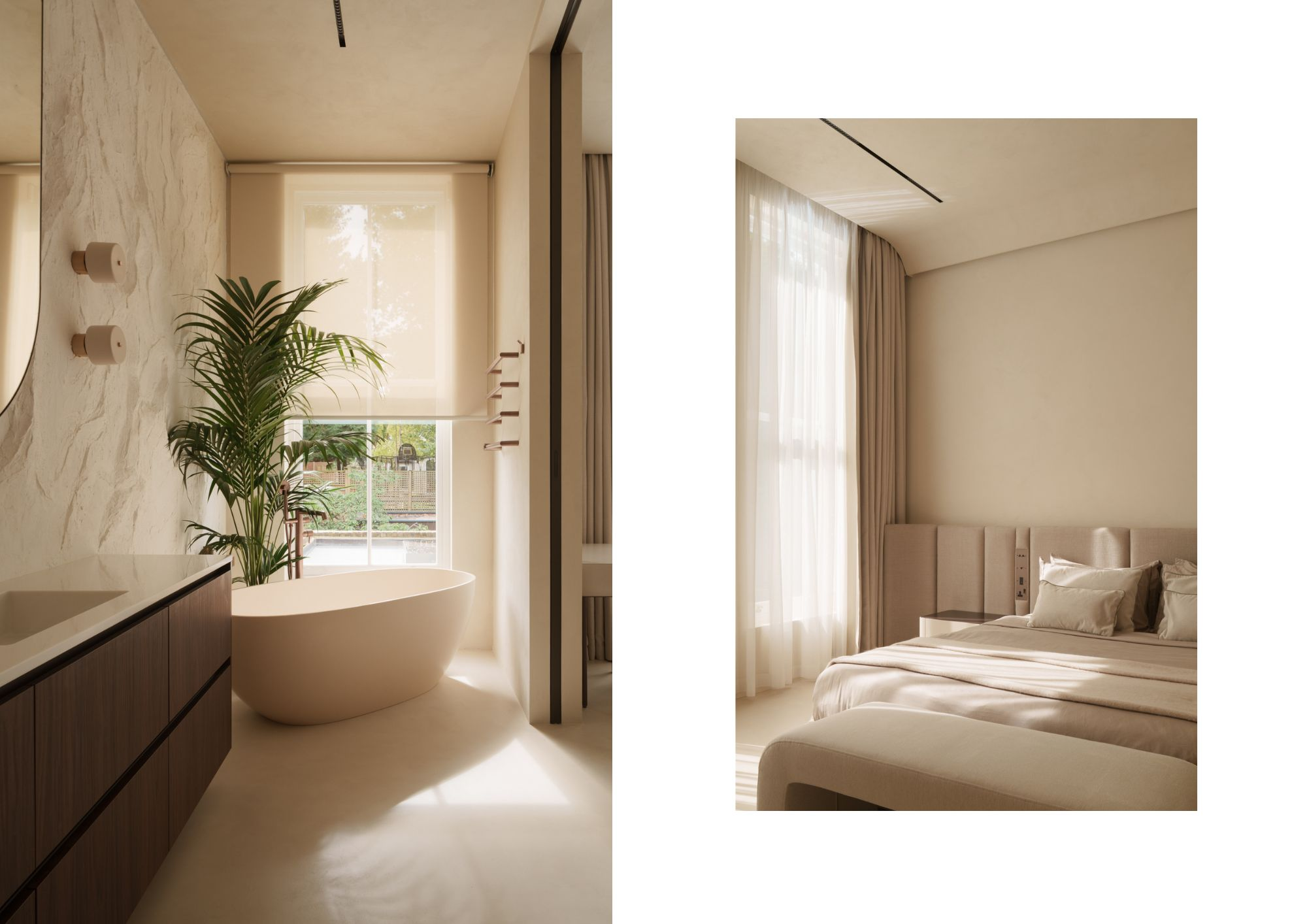
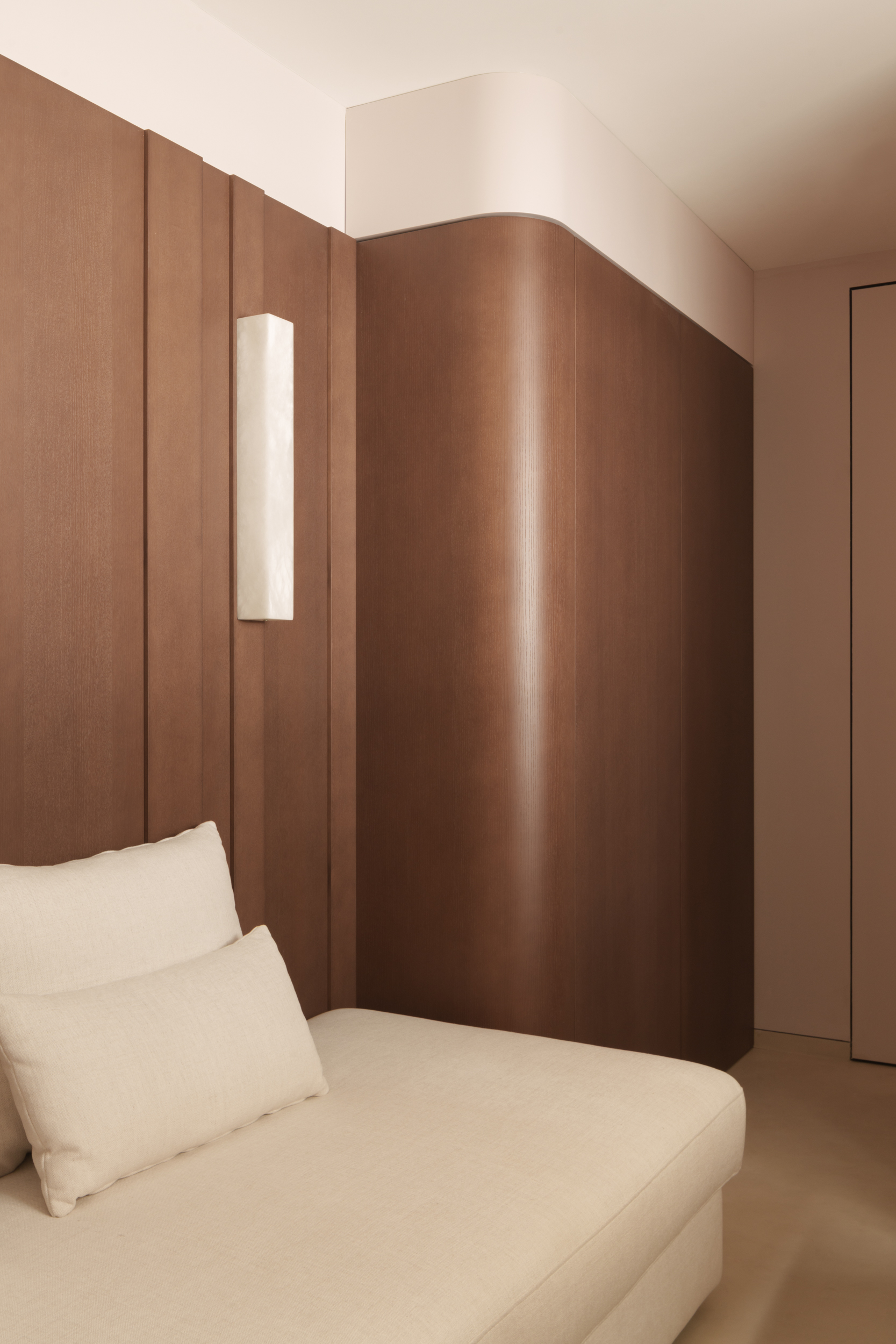
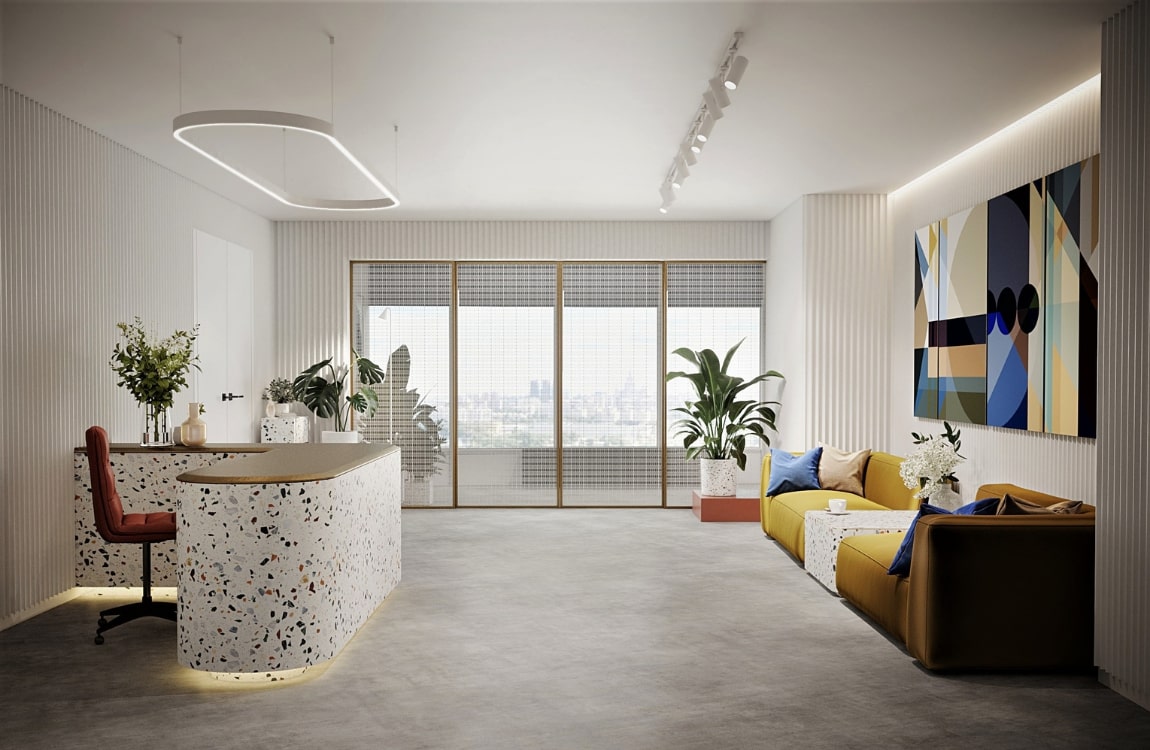
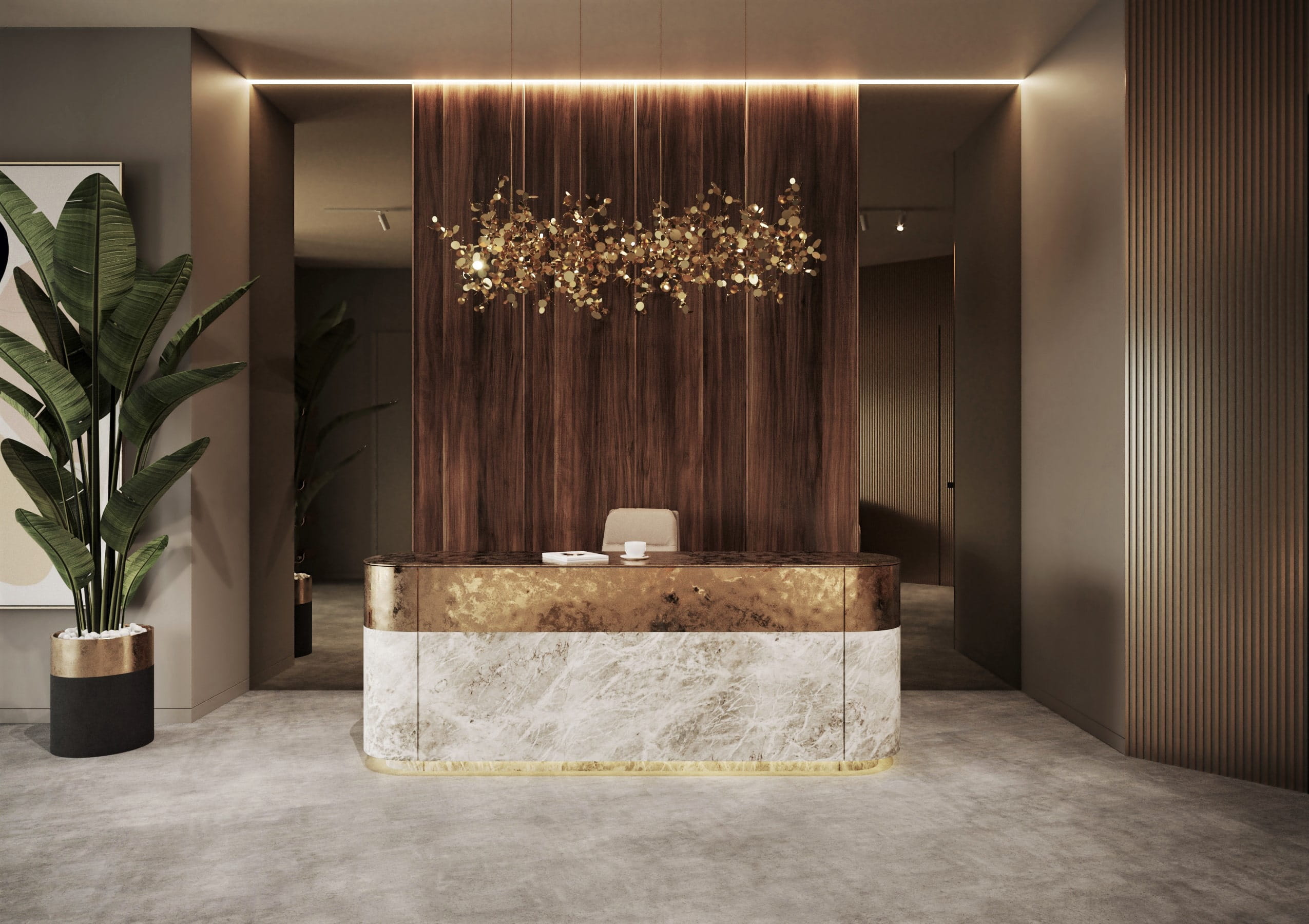
Materiality anchors the project’s calm visual language. Natural wood of a uniform texture runs consistently throughout — across furniture fronts, stairs, and doors — bringing warmth and cohesion. For the floors, walls, and parts of the ceiling, the designers chose microcement: a seamless, monolithic finish that bridges tactile and visual purity. To prevent cracking, the team spent nearly four months testing different substrates, a process that became one of the project’s main engineering challenges. The final result achieves the desired sense of spatial infinity and quiet perfection.
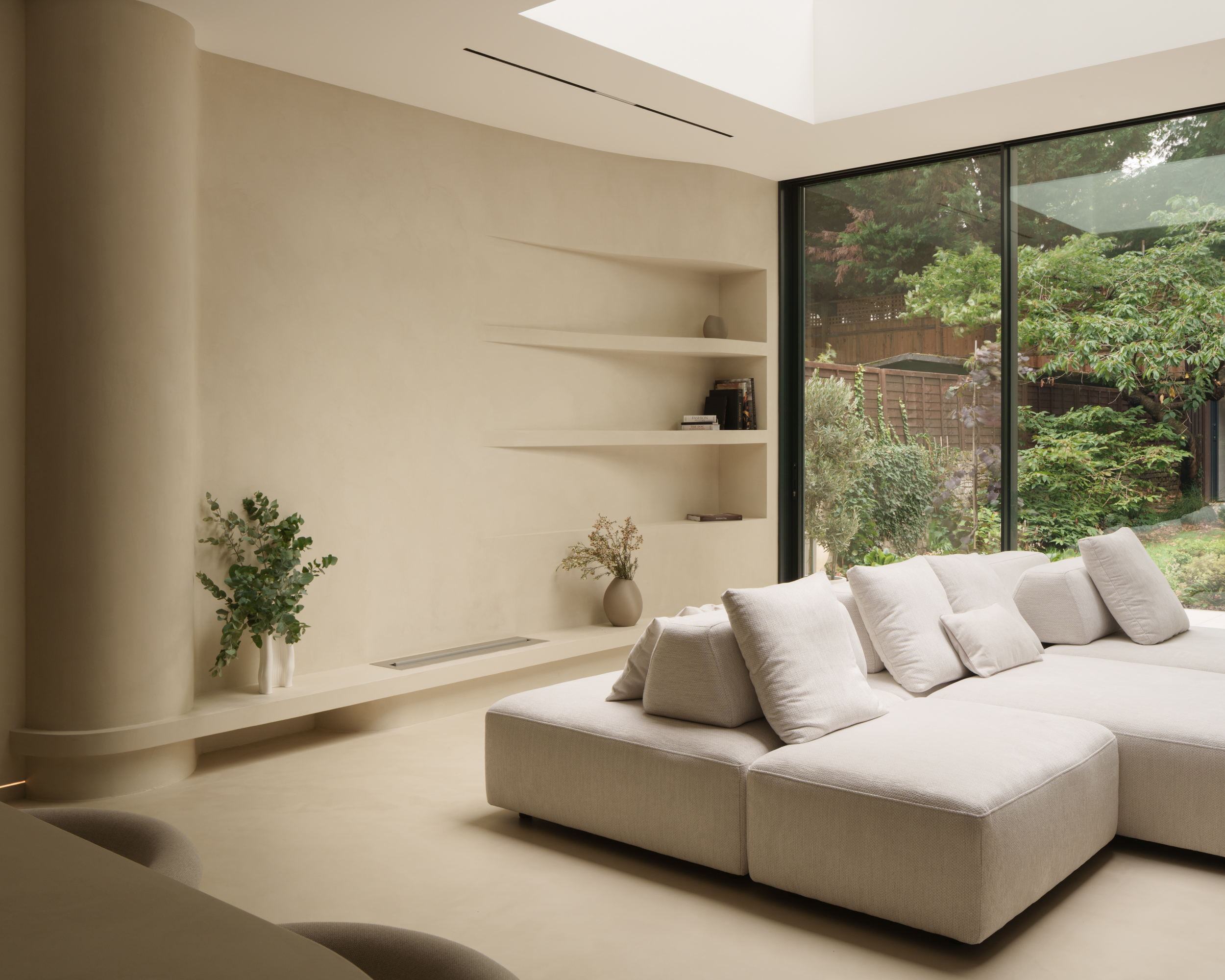
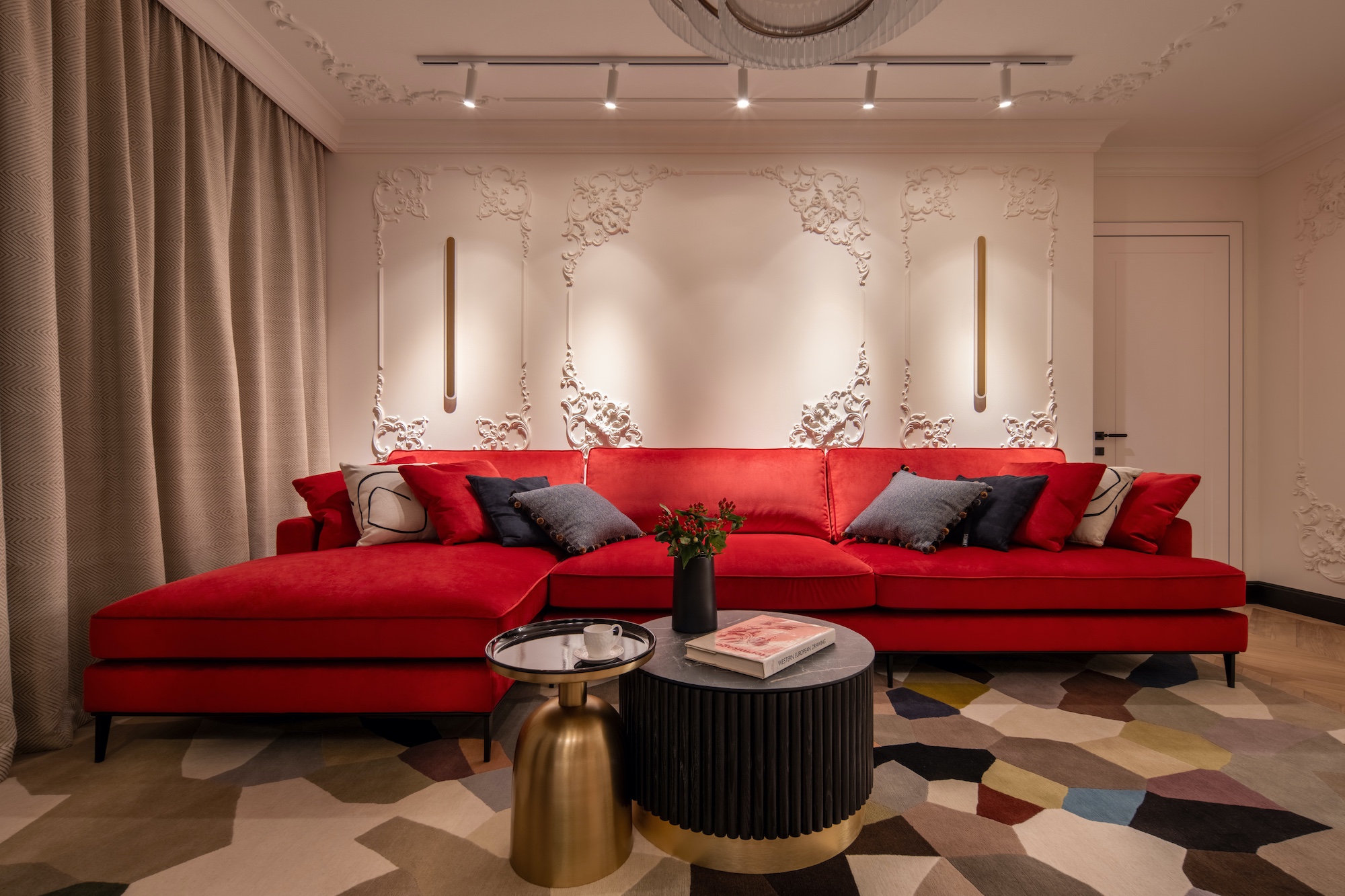
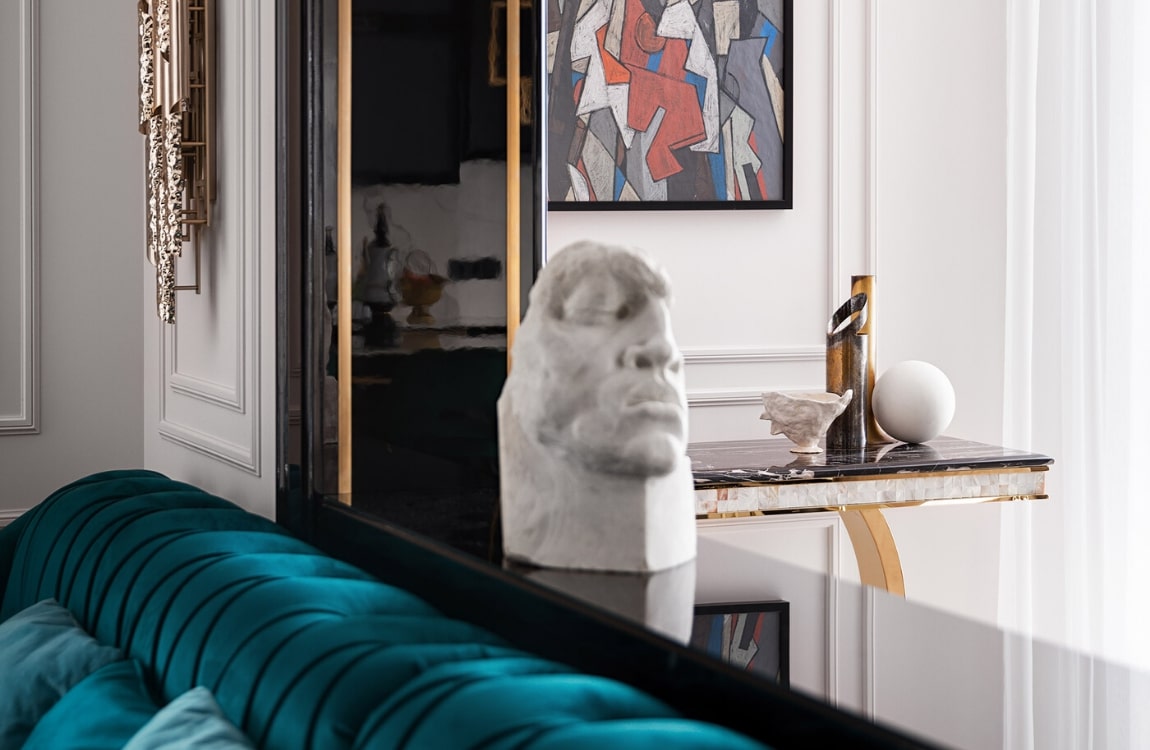
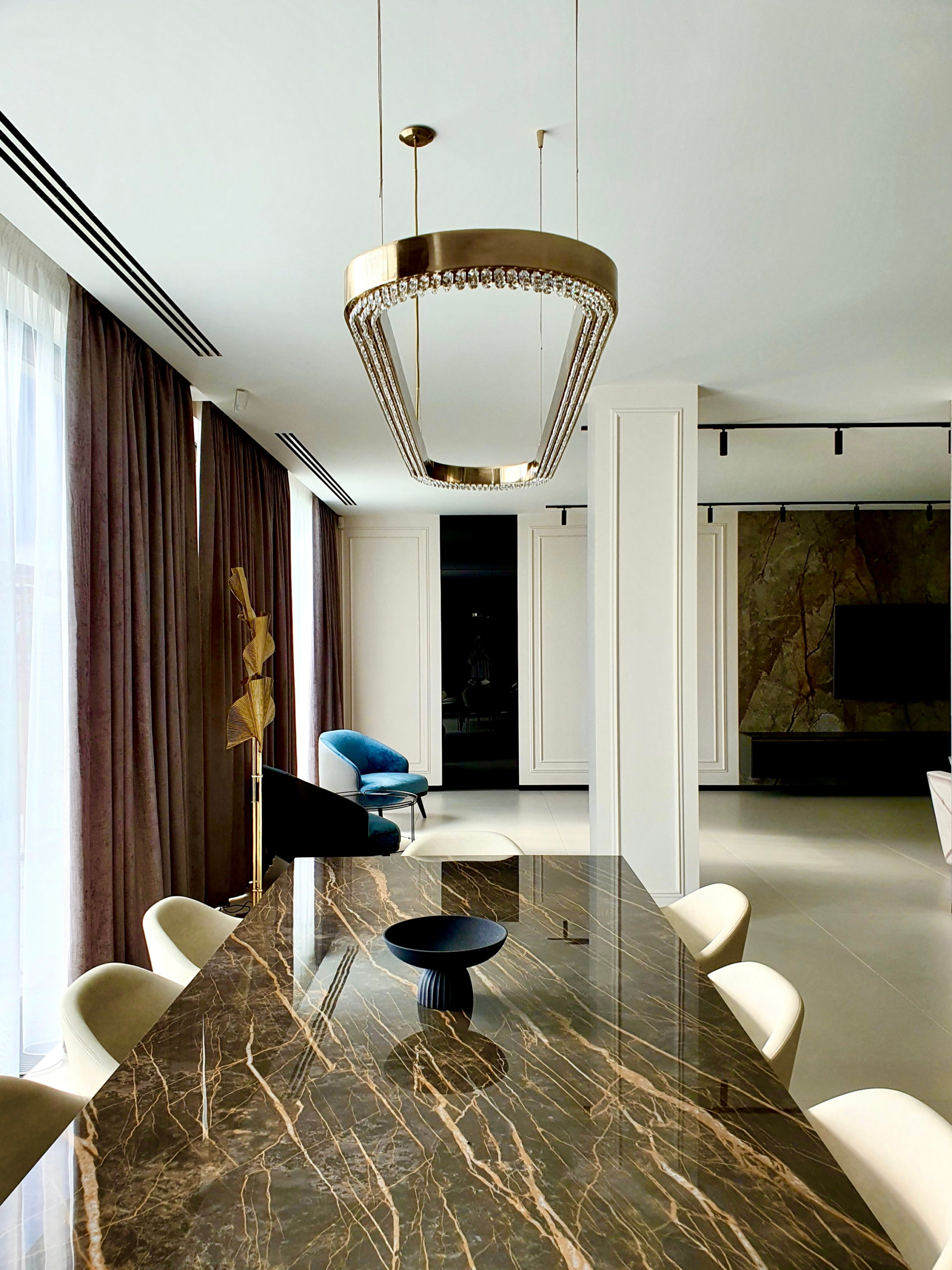
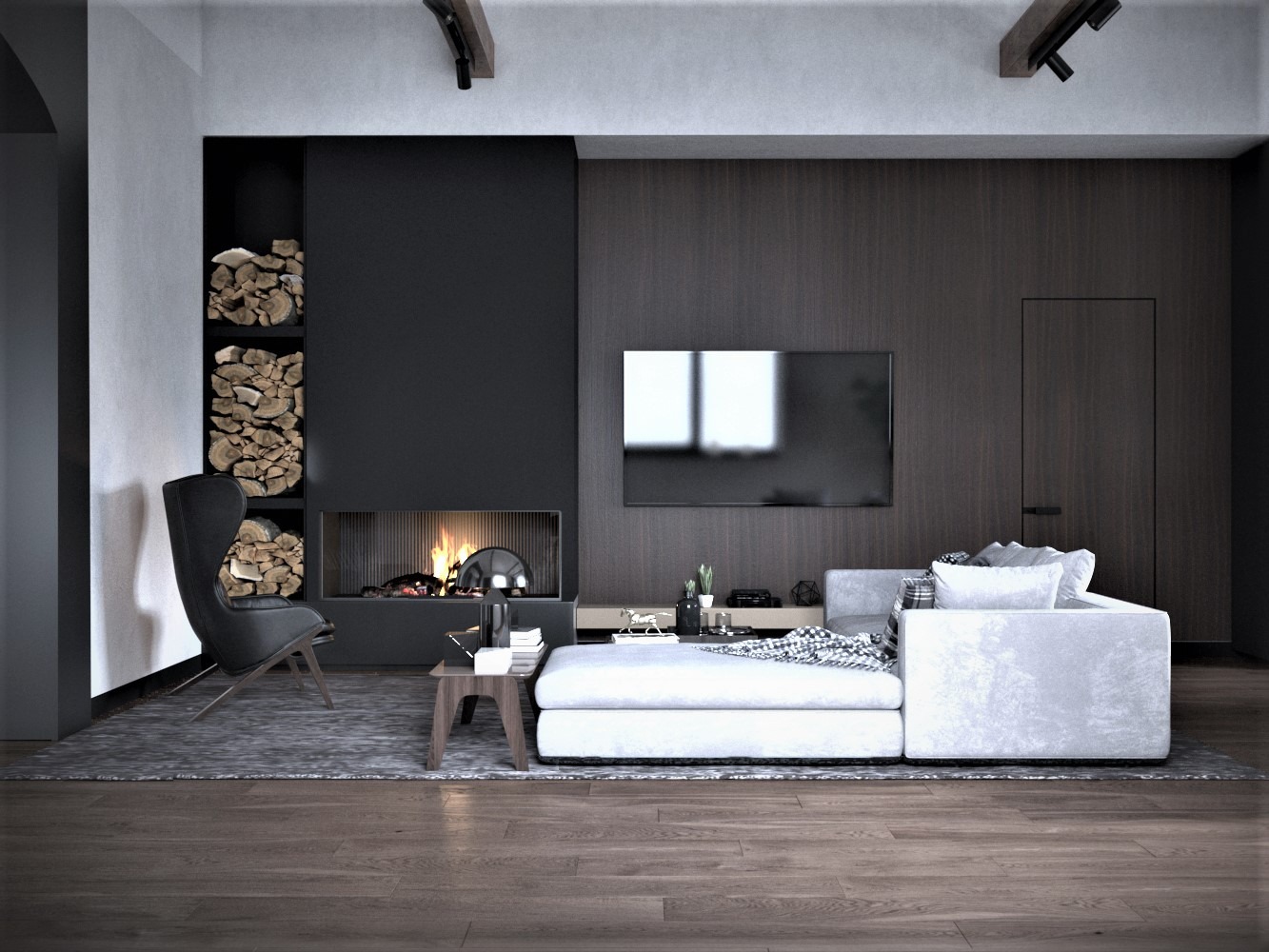
A structural column between the living and dining zones became an intentional focal point. Impossible to conceal, it was reimagined as a sculptural feature that subtly divides the fireplace area from the dining space. Above the sofa, a skylight draws in daylight, heightening the sense of openness. The theme of sculptural softness continues throughout — in the rounded corners of walls and ceilings, the bowl-shaped bath, the rock-like kitchen island, and textured finishes reminiscent of natural stone. Lighting and furniture forms echo each other, while all metal elements share a single tone for balance and cohesion.
Every item of furniture was custom-made to fit the concept. A large double-sided sofa, for instance, offers adjustable seat depth, inviting relaxed film nights on one side and fireside contemplation on the other.
Every centimetre of the house was approached with precision — from the reconfiguration of the layout and replacement of beams to the creation of a new metal framework, the installation of utilities and drainage, new stairs, and the skylight. The team remained involved throughout every stage, from design and management to logistics and styling.
The result is a home that radiates emotional balance and inner harmony — a space where simplicity finds its fullest expression.